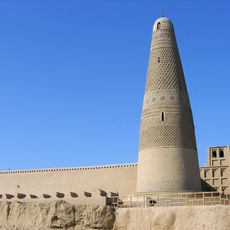
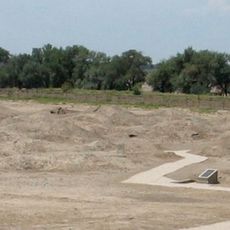
Miran fort, Archaeological site in Xinjiang, China.
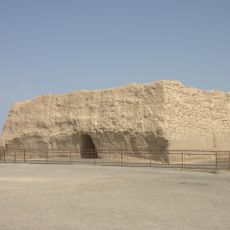
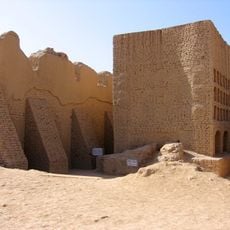
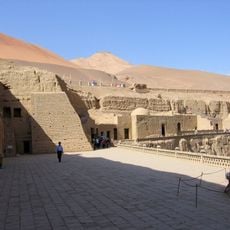
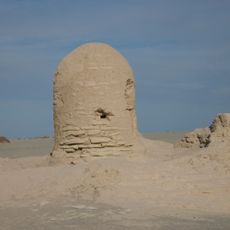
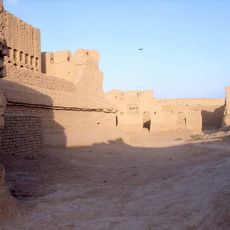
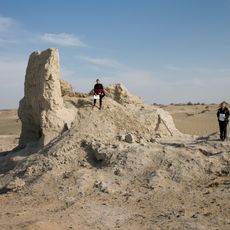
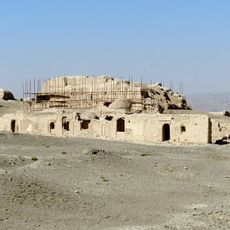
Miran fort is a ruined defensive structure in Miran, Xinjiang, China, active during the Tibetan Empire in the 8th and 9th centuries AD. It is similar in structure to the fort at Mazar Tagh, which the Tibetan army also used in the same period. Excavations uncovered 44 rooms (sites M.I.i–M.I.xliv) and hundreds of Tibetan woodslips and paper documents.
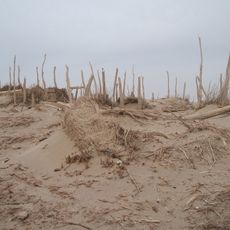
The fort was used as a military post during the 8th and 9th centuries, when the Tibetan Empire expanded into Central Asia and took control of these remote western territories. After the Tibetan withdrawal, the site was abandoned and buried under desert sand until early 20th-century explorers brought it back to light.
Excavations at the site uncovered hundreds of Tibetan military documents and administrative records, making it one of the richest sources of early Tibetan writing found outside the Tibetan plateau. These texts show how the Tibetan Empire managed its frontier posts through written orders and supply lists.
Reaching the site requires planning ahead, as local checks are conducted to prevent unauthorized access. A guide with knowledge of the area will help visitors navigate to the main sections without getting lost in the surrounding desert terrain.
Marc Aurel Stein first visited the fort briefly on 8 December 1906 and returned on 22 January 1907 to excavate 44 rooms, recovering over a hundred Tibetan woodslips. Finds also included Turkish runic fragments, Brahmi palm-leaf documents and Kharosthi texts on silk. Many manuscripts are now in the British Library, while artefacts are held at the British Museum under pressmarks MAS.590 to MAS.626.
The community of curious travelers
AroundUs brings together thousands of curated places, local tips, and hidden gems, enriched daily by 95,439 contributors worldwide.