Yangguan, Mountain pass and watchtower in Dunhuang, China
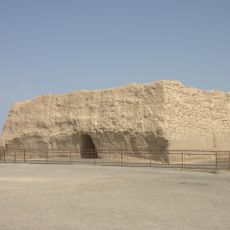
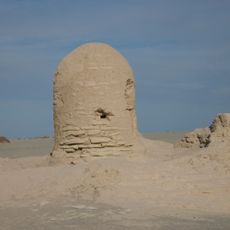
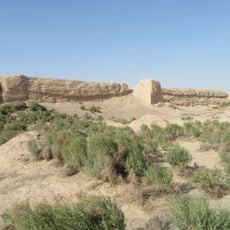
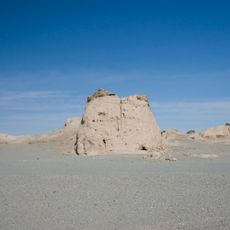
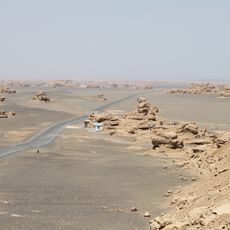
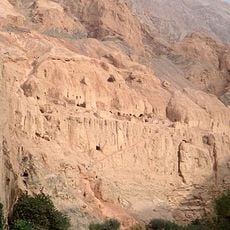
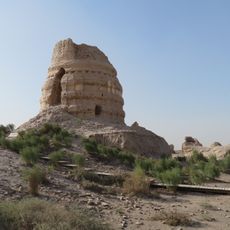
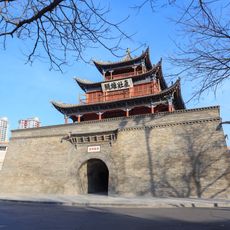
Yangguan is a pass southwest of Dunhuang whose surviving watchtower stands on a rounded hill: a rectangular block of eroded earth or mudbrick, pale tan to reddish-brown above and darker grayish-green at its base, with crumbling edges and a stepped, uneven top. The hill rises from barren, stony ground. The fortress itself lay in ruin by around AD 900.
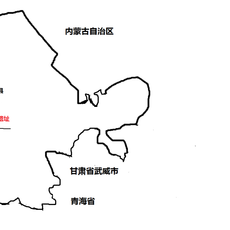
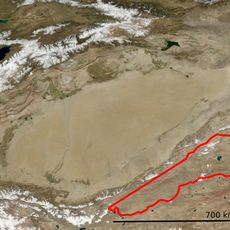
The site was built around 120 BCE during the Han Dynasty to secure trade routes and monitor activity along the Silk Road. It remained a key control point for as long as these routes mattered.
Yangguan means "Sun Gate", named because it lies south of Yumenguan, the sunny side of a hill being the southern side. As the last stop before the Western Regions, it became linked with sad parting in Chinese poetry. Wang Wei's Tang poem "Seeing Yuan'er off on a Mission to Anxi" inspired the farewell song "Three Variations of Yangguan", still played on the guqin.
The site is open year-round and is best visited from Dunhuang, where local tourism agencies arrange visits. The most comfortable time to go is outside the intense summer heat.
Archaeological work uncovered an ancient signaling system using fire and smoke between watchtower stations across great distances. This method allowed messages to travel quickly without sending messengers.
The community of curious travelers
AroundUs brings together thousands of curated places, local tips, and hidden gems, enriched daily by 92,802 contributors worldwide.