Ta'er Temple, Buddhist temple in Guazhou County, China.
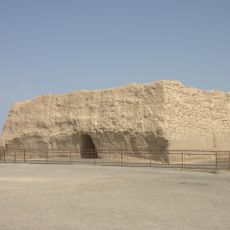
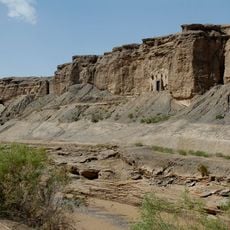
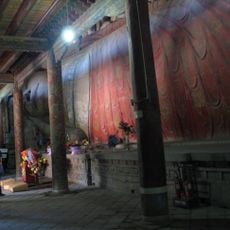
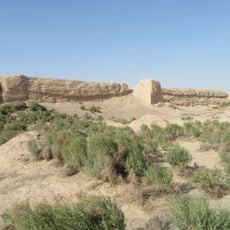
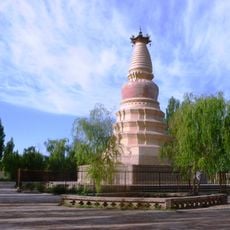
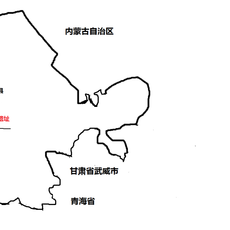
Ta'er Temple is a ruined Buddhist temple 1 km east of Suoyang City in Guazhou County, Gansu. Its 15,000 m² site holds a central temple foundation, a 14.5 m adobe main pagoda covered in white lime and shaped like an overturned bowl, 11 smaller pagodas to its north, and the foundations of drum and bell towers and monks' quarters.
Scholar Li Zhengyu identified the ruins with the King Ashoka Temple recorded in documents, first built by the Northern Zhou dynasty (557–581) at the latest and destroyed under Emperor Wu's suppression of Buddhism. It was rebuilt in the Tang and Western Xia dynasties; the adobe pagodas standing today date to Western Xia (1038–1227). In 627 the monk Xuanzang is thought to have preached here for over a month before leaving for India.
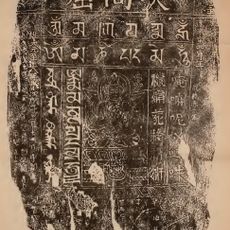
The name Ta'er means "Pagoda Temple", taken from the adobe stupa that still stands at the site. A Western Xia monk named Huicong from the King Ashoka Temple recorded his pilgrimage with disciples in cave 16 of the Yulin Caves. A paper document found inside one of the smaller pagodas bears the mantra Om mani padme hum in Tangut script.
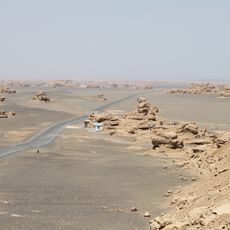
The ruins lie 1 km east of Suoyang City, spread over 15,000 square metres, with the main pagoda at the centre and 11 smaller ones to its north. The site is part of the Silk Roads UNESCO inscription of 2014, and the adobe structures stand unprotected in an arid, windy setting. Allow time to walk between the scattered foundations, and bring water and sun protection.
Local eyewitnesses said a band of Russians came in the 1940s and broke open the main pagoda, removing numerous sutras and paintings. Archaeologists later found a paper document inside one of the smaller pagodas, printed with the mantra Om mani padme hum in Western Xia Tangut script.
The community of curious travelers
AroundUs brings together thousands of curated places, local tips, and hidden gems, enriched daily by 94,408 contributors worldwide.