Zen Master Jingzang Stupa, Buddhist pagoda in Dengfeng, China.
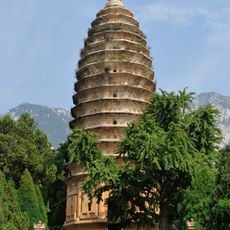
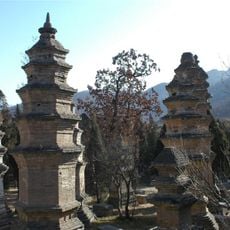
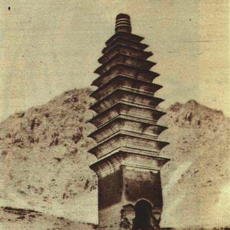
Zen Master Jingzang Stupa is a brick structure in Dengfeng composed of stacked levels that demonstrate traditional Chinese proportions and symmetry. The tower features the refined details characteristic of Buddhist memorial architecture from this period.
Jingzang, a monk of Huishan Temple who died in 746, was a disciple of the Chan master Hui'an (died 709). His disciples raised this tomb pagoda in the fifth year of the Tianbao era (746), as its inscription records. In 1988 it was listed as a Major Historical and Cultural Site Protected at the National Level (batch 3, no. 137).
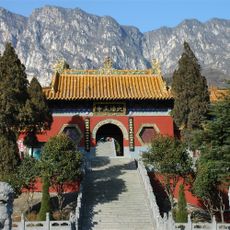
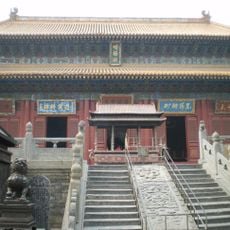
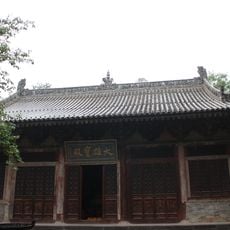
The name on the pagoda's inscription links the site to Jingzang, a disciple of the Chan master Hui'an, who died in 709. The octagonal brick form imitates a wooden pavilion, a Tang-era design visitors can compare with the temple halls nearby. The stupa stands west of Huishan Temple on Mount Song's southern slope.
The stupa stands west of Huishan Temple on the southern slope of Mount Song, in Dengfeng, Henan. It is a protected national monument, so access is by arrangement with the temple grounds rather than as a standalone attraction. The structure is 10.35 m tall and consists of an underground palace, base, body and top.
The octagonal brick form imitates timber framing, making it the only surviving Tang-dynasty brick pagoda of this type in China. Its inscription records that disciples built it after Jingzang, a pupil of the monk Hui'an, died in 746; the structure rises 10.35 m above an underground palace.
The community of curious travelers
AroundUs brings together thousands of curated places, local tips, and hidden gems, enriched daily by 94,461 contributors worldwide.