Category:Mi County Yamen, Administrative building from imperial China in Chengguan Town, China
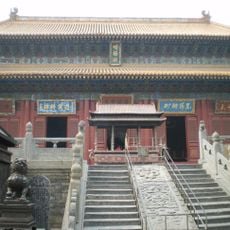
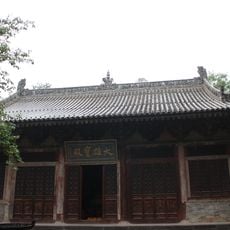
Mi County Yamen faces south and occupies over 40,000 square metres in five successive courtyards. Its more than 300 rooms, built of grey brick with grey-tiled hard-gable roofs, include the main gate, ceremonial gate, the Great Hall (Mù'ài Hall), the second and third halls, the Daxian Tower, side wings and the prison. Between the two gates lies a lotus pond, 18 metres long and 6 metres wide, the only one at a county yamen in the Central Plains.
Mi County Yamen was first built in 616, the twelfth year of the Sui Daye era, when the county seat moved from Dawai Town to the present old town site. It burned during the Yuan dynasty and was repeatedly damaged and repaired under the Ming and Qing; the surviving buildings were rebuilt on the same spot by magistrate Zhong Kunhua in the Kangxi period. More than 200 magistrates served here until the 1970s, and in March 2013 the State Council listed it as a Major Historical and Cultural Site Protected at the National Level.
The gate is flanked by two Ming-dynasty pavilions: the Jing Shan Pavilion on the east held a red wooden tablet praising good deeds, while the Shen Ming Pavilion on the west held a black tablet publicising wrongdoings as a warning. Between the gate and the ceremonial gate, a 18-metre-long lotus pond, a pun on 'integrity and shame', is the only one among Central Plains yamen.
The complex faces south and runs through five successive courtyards, from the gate and ceremonial gate past the halls to the Daxian Tower at the rear; the prison lies southwest of the main hall, west of the ceremonial gate. The site covers more than 40,000 square metres, so allow time to walk it. The prison remained in use until 2003 and now forms part of the yamen museum.
The prison, southwest of the main hall and west of the ceremonial gate, held women in the south courtyard and men in the north, where the interrogation room and the shrine to the prison god stood. It stayed in use as a jail until 2003, when it became part of the yamen museum; over 60 brick-and-stone cells and jailer rooms survive.
The community of curious travelers
AroundUs brings together thousands of curated places, local tips, and hidden gems, enriched daily by 93,107 contributors worldwide.