Capri, island in the Tyrrhenian Sea, Gulf of Naples, Italy
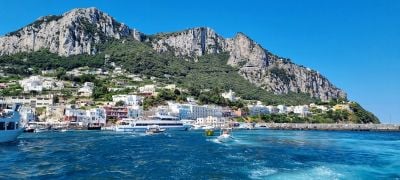
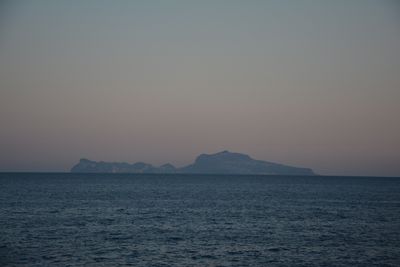
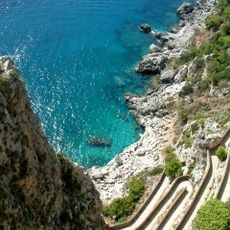
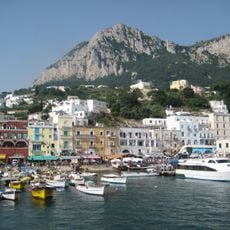
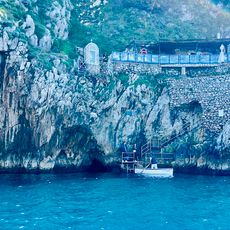
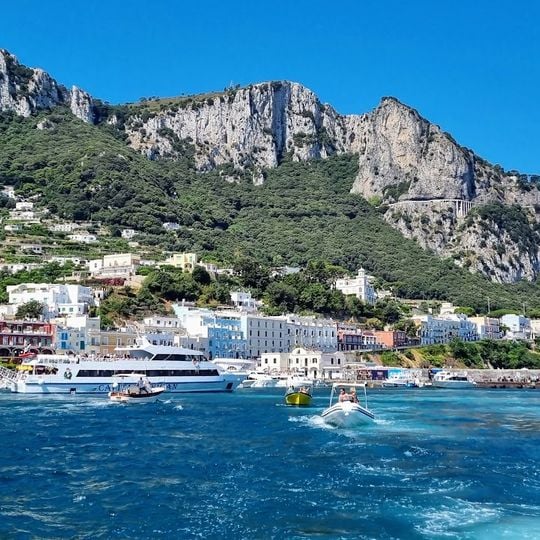
Capri is a limestone island in the Gulf of Naples that stretches 6 kilometers in length and reaches 589 meters (1,932 feet) at its highest point on Monte Solaro. Steep cliffs surround most of the coastline, while two protected harbors at Marina Grande and Marina Piccola provide access from the water.
Tiberius moved permanently to Capri in AD 27 and governed the Roman Empire from Villa Jovis until his death in AD 37. In 1806 French troops occupied the island and were ousted by the British in May; the French recaptured it in 1808 and held it until 1815. From the later 19th century Capri became a resort for European artists and writers.
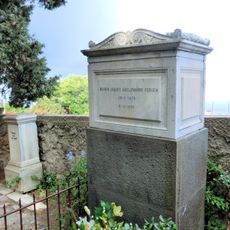
The name Capri may come from the Greek word for wild boar, as boar fossils have been found on the island. Since 1977 the island's wines hold DOC status: Capri Bianco is at least 80% Falanghina and Greco Bianco, Capri Rosso at least 80% Piedirosso. German visitors founded their own Protestant church in 1899 and a non-Catholic cemetery where over 200 people are buried.
Ferries run multiple times daily from Naples and Sorrento throughout the year, with additional routes to the Amalfi Coast during summer months. A chairlift carries visitors from Anacapri village to the summit of Monte Solaro for wide views across the entire island and sea.
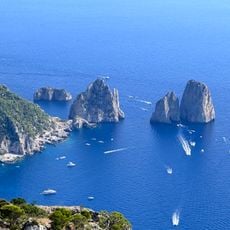
The Faraglioni are three sea stacks off the southeastern coast; the tallest, Stella, rises about 109 metres. The blue lizard of the Faraglioni, Podarcis siculus coeruleus, is a colour variant of the Italian wall lizard found on one of these stacks, not a separate species.
The community of curious travelers
AroundUs brings together thousands of curated places, local tips, and hidden gems, enriched daily by 92,109 contributors worldwide.