Ashinaga Shrine, Shinto shrine in Japan
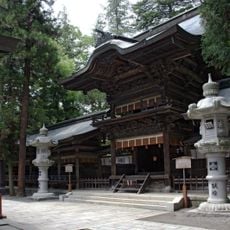
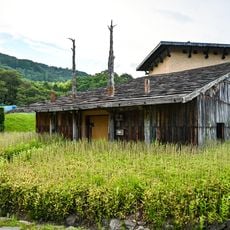
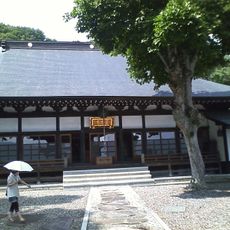
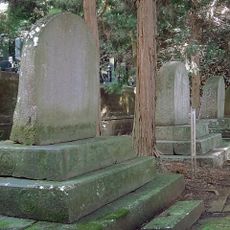
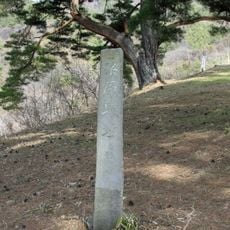
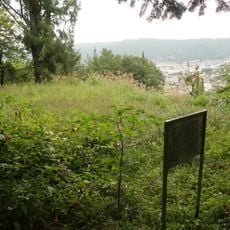
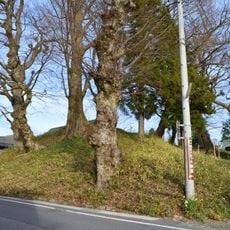
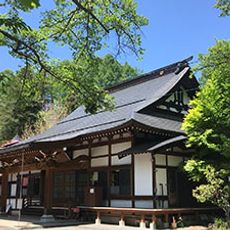
Ashinaga Shrine stands on the hillside of the former Kuwabara Castle in Suwa, Nagano Prefecture. Its worship hall and dance hall are Suwa City-designated tangible cultural properties, and the main hall was rebuilt in 1842. The shrine was once called Ogimiya because its roof was thatched with ogi grass.
According to the Suwa Shiseki Yoko, the area once jointly enshrined the Ashinaga and Tenaga deities; when it split into Kami-Kuwabara and Shimo-Kuwabara, Ashinaga was moved to Kami-Kuwabara. Tradition holds that in the Daido era (806–810) Misogi Hori Arikazu, legendary ancestor of the Suwa Taisha Kamisha o-hori, built a large sanctuary here. The shrine became a subsidiary of Suwa Taisha; the 1578 Kamisha zoeicho records construction at Kami-Kuwabara, and the buildings were rebuilt in 1842.
The name Ashinaga comes from the deity Ashinazuchi no Mikoto, also called Ashinaga-hiko no Kami, who accompanies Suwa Taisha's Takeminakata no Kami. In Japanese myth he is the father of Kushinada-hime. A counterpart shrine in Suwa, Tenaga Shrine, honours the mother deity Tenazuchi no Mikoto; the two were once worshipped together in the Kuwabara area before being split between upper and lower Kuwabara.
The shrine sits on a hillside offering views of the surrounding area and is easily reached from the city center. Stone paths lead through well-kept grounds, and visiting in early morning or evening hours provides the quietest experience.
The shrine stands on the slope of the former Kuwabara Castle site, and its name was once written with the characters for hand and foot: old records of Suwa Taisha list both Tenaga and Ashinaga, and the paired Tenaga Shrine in the same city honours the mother deity. The grounds were long roofed with ogi thatch, hence the old name Ogi-no-miya.
The community of curious travelers
AroundUs brings together thousands of curated places, local tips, and hidden gems, enriched daily by 93,546 contributors worldwide.