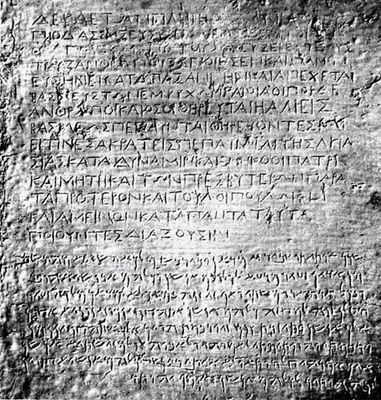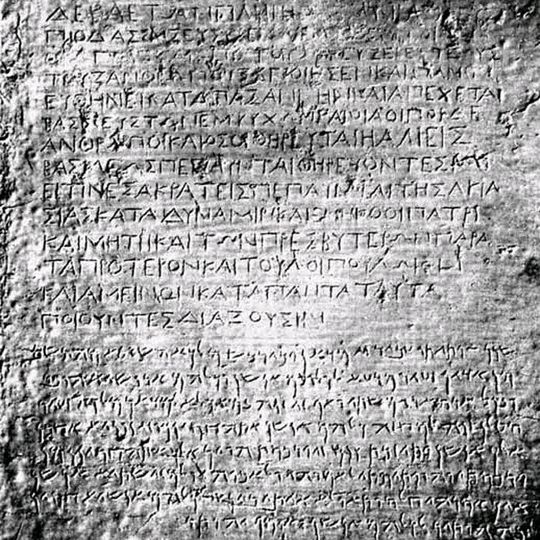
Kandahar Bilingual Rock Inscription, Bilingual rock inscription at National Museum of Afghanistan.
The Kandahar Bilingual Rock Inscription is a stone fragment with Greek and Aramaic texts now displayed at the National Museum of Afghanistan in Kabul. The inscription was carved into a rock and shows both writing systems side by side on the same surface.
The stone dates from 260 BCE and was created after the military campaigns of Alexander the Great in the region. This period marked the beginning of a longer era when Greek rulers and local populations lived and worked side by side.
The use of two writing systems shows how administration and trade worked in this region when different communities lived together and communicated with each other. Today the inscription stands as a visible record of a time when local and foreign languages were both in official use.
The National Museum of Afghanistan in central Kabul displays the inscription alongside other archaeological finds from the region. The exhibit is part of the historical collections and can be viewed during regular museum hours.
The stone carries a text addressing the population and conveying the same content in both languages, which was unusual for administrative documents of that time. The double rendering allowed different groups to read and understand the same message.
The community of curious travelers
AroundUs brings together thousands of curated places, local tips, and hidden gems, enriched daily by 91,659 contributors worldwide.