Mundigak, Archaeological site in Kandahar, Afghanistan
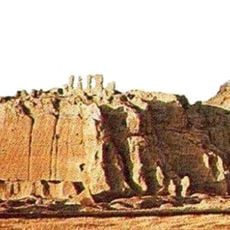
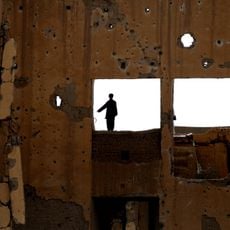
Mundigak is an ancient settlement in Kandahar Province containing the remains of dwellings, defensive walls, and other structures buried several meters below ground. The ruins show distinct phases of occupation, with walls and foundations stacked in different layers on top of one another.
Mundigak was occupied from the 5th to the 2nd millennium BCE, with four main periods identified. Period I began in the central mound, where rectangular adobe houses of one to three rooms appeared by layer 3. A thick ash layer separated Period I from Period II, when population density rose and a deep well was dug in a courtyard. In Period IV the settlement became a city with a palace on hill A, its north facade lined with white-stuccoed pilasters. Excavation by Jean Marie Casal ran from 1951 to 1958.
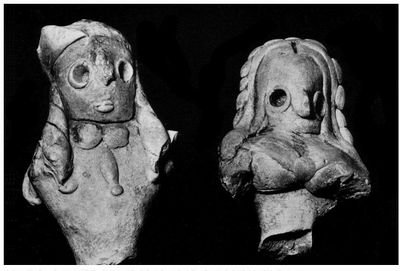
Clay figurines of humped bulls and snakes found at Mundigak resemble those of the Indus Valley, and pottery from the site is close to wares from Kot Diji. Painted jars carry fig-leaf motifs and a tiger-like animal. Female figurines about 5 cm tall recall those from Deh Morasi Ghundai, dated around 3000 BCE.
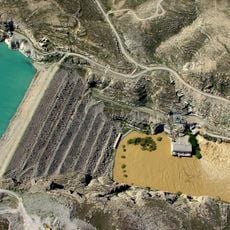
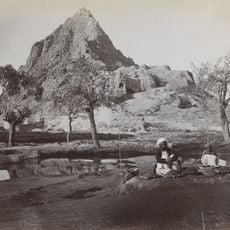
Mundigak lies about 55 km northwest of Kandahar, near Shāh Maqsūd on the upper drainage of the Kushk-i Nakhud River. The excavated mound stood nine meters tall and the site covers 21 hectares, so expect open, uneven ground with few facilities. Travel outside Kandahar requires checking security conditions beforehand.
The supposed palace on Hill A was built on a platform made by levelling older houses on the hilltop. Its north facade carried a row of stuccoed, white-painted pilasters, some still two metres high when excavated, topped by a decorated tile strip.
The community of curious travelers
AroundUs brings together thousands of curated places, local tips, and hidden gems, enriched daily by 92,571 contributors worldwide.