Chil Zena, Archaeological stairs in western Kandahar, Afghanistan
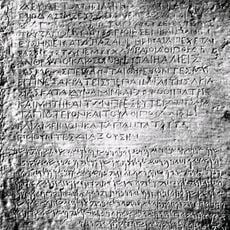
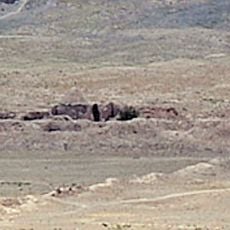
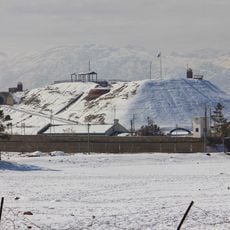
Chil Zena is a mountainous outcrop at the western limit of Kandahar, reached by forty stone steps that give the site its name. The staircase was commissioned by the Emperor Babur, and the outcrop later received inscriptions about his conquests (1526–1530), apparently carved by his son Humayun. The Kandahar Bilingual Rock Inscription of Ashoka still stands in an open-air compound on the mountainside.
The staircase was carved on the orders of Emperor Babur, founder of the Mughal Empire, who reigned 1526–1530. His son Humayun later had inscriptions of Babur's conquests cut into the rock. The outcrop lies beside the old citadel of Old Kandahar, destroyed by Nadir Shah Afshar of Persia in 1738.
The name Chil Zena means "Forty Steps" in reference to the forty stone steps cut to the top of the outcrop. The Kandahar Bilingual Rock Inscription of Emperor Ashoka, in Greek and Aramaic, still stands in an open-air compound on the mountainside. Inscriptions recording Babur's conquests of 1526–1530 were carved here, apparently by his son Humayun.
The forty stone steps climb the outcrop at the western edge of Kandahar, on the north side of the site of Old Kandahar. The Ashoka bilingual rock inscription lies in an open-air compound on the mountainside, not at the top of the stairs. The top gives a wide view over the city.
The Kandahar Bilingual Rock Inscription found on the mountainside is written in Greek and Aramaic, not in an Indian script. Its discovery here confirmed a Greek population at Kandahar in the 3rd century BCE and the reach of Ashoka's control into Arachosia.
The community of curious travelers
AroundUs brings together thousands of curated places, local tips, and hidden gems, enriched daily by 92,720 contributors worldwide.