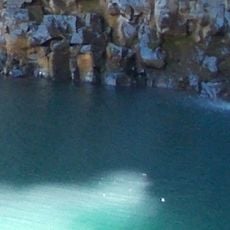
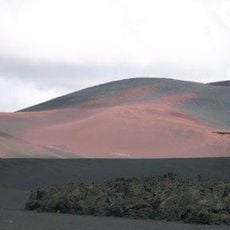
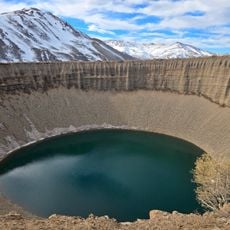
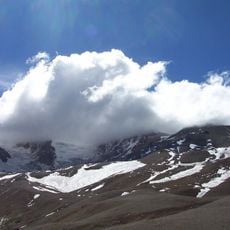
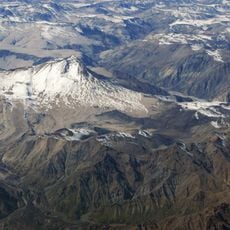
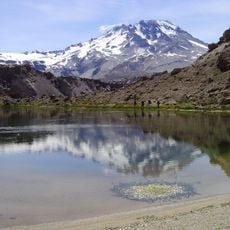
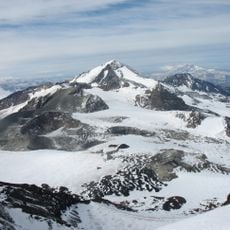
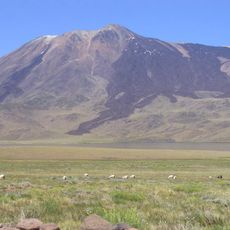
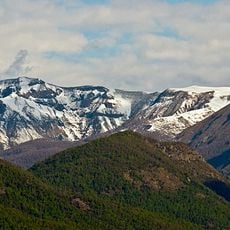
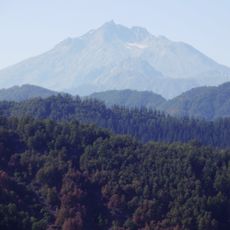
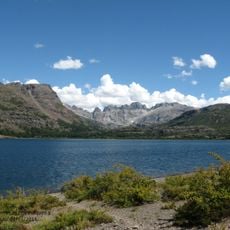
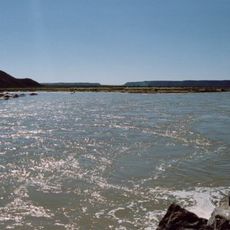
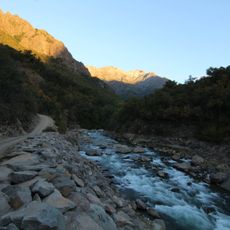
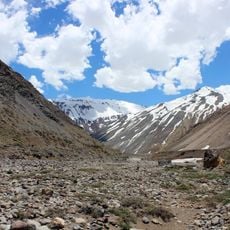
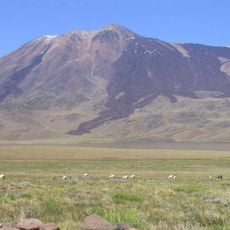
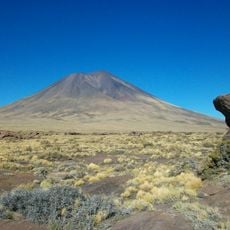
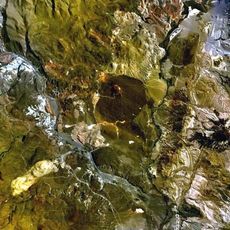
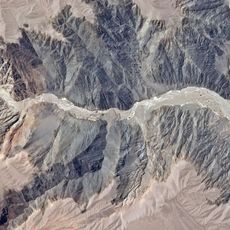
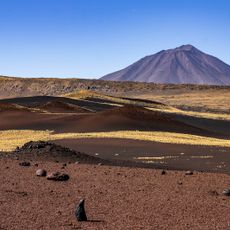
Payun Matru, Shield volcano in Malargüe Department, Argentina.
Payun Matru is a shield volcano in the Malargüe Department of Mendoza Province, Argentina, and one of the largest of its kind in the Southern Hemisphere. Its broad, gently sloping sides are built from layers of hardened lava, giving the volcano a wide, dome-like profile rather than a sharp peak.
Volcanism at Payún Matrú began in the Plio-Pleistocene and built the shield, the Pampas Onduladas lava flow and the Payun stratovolcano. A major eruption between 168,000 and 82,000 years ago collapsed the summit into a 7–8 km caldera. Activity continued into the Holocene until about 515 years ago, and local oral tradition recalls earlier eruptions.
In Mapuche the name means "goat's beard"; in Pehuenche it is traced to payén, "copper". The field is also called Payenia. Oral tradition of local inhabitants refers to eruptions earlier than the last one, about 515 years ago.
Getting to this volcano requires a high-clearance off-road vehicle and the company of a local guide, as there are no marked trails and the surrounding terrain is remote. A visit is most manageable between November and March, the Southern Hemisphere summer, when snow and strong winds are less of a concern.
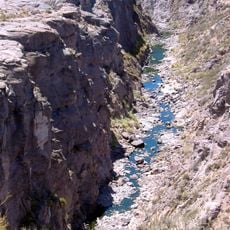
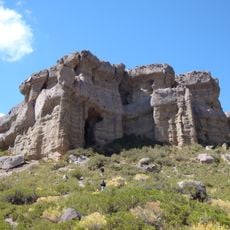
The Pampas Onduladas flow, part of the field, runs 167–181 km and is the world's longest Quaternary lava flow. Older flows show pahoehoe surfaces with lava tubes and pressure ridges; Holocene flows are mostly blocky aa lava. Some flows dammed the Rio Grande, which later cut through them, leaving table-like landforms and canyons.
The community of curious travelers
AroundUs brings together thousands of curated places, local tips, and hidden gems, enriched daily by 93,335 contributors worldwide.