Abanico Formation, Geological formation in O'Higgins Region, Chile
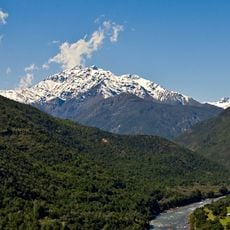
The Abanico Formation is a 3-kilometre-thick succession of volcanic tuffs and breccias with intercalated lavas, clastic sedimentary rocks and limestones, exposed in the central Andes of Chile. It crops out as two parallel north–south strips between 33° and 36° S, the western one bordering the Central Valley and the eastern one the Mesozoic units of the Cordillera Principal. A small part appears in Mendoza Province, Argentina.
Sediments of the Abanico Formation accumulated from the Eocene to the Miocene in the north-south elongated Abanico Extensional Basin, within the context of the Andean orogeny. Tectonic inversion between 21 and 16 million years ago collapsed the basin and incorporated its sediments into the Andean ranges, with the northern part inverting before the southern part. Parts of the formation later experienced prehnite-pumpellyite facies metamorphism.
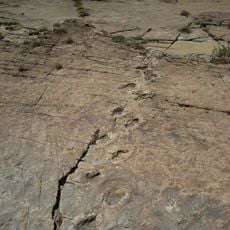
The formation holds significance for researchers because it preserves evidence of ancient animal life that once inhabited this region. These remains help scientists understand how life evolved in the Andean landscape over deep time.
The formation crops out in two parallel north–south strips between 33 and 36 degrees south latitude, spanning the Valparaíso, Santiago Metropolitan and O'Higgins regions. The western strip borders the Central Valley and the eastern one the Mesozoic units of the Cordillera Principal. The Tinguiririca fossil site lies near the Tinguiririca River in O'Higgins; access is over mountain terrain, so go with a local guide.
The formation contains volcanic rocks such as basalt and andesite that were significantly altered by hot fluids moving through the earth. This metamorphic transformation gives certain sections distinctive mineral characteristics that researchers observe while studying the layers.
The community of curious travelers
AroundUs brings together thousands of curated places, local tips, and hidden gems, enriched daily by 94,362 contributors worldwide.