Fort of Santa Catalina, Colonial military fort in Barrios Altos, Lima, Peru
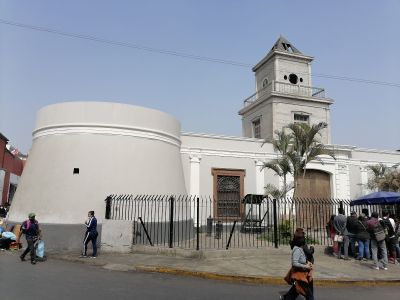
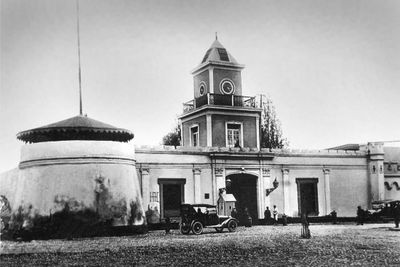
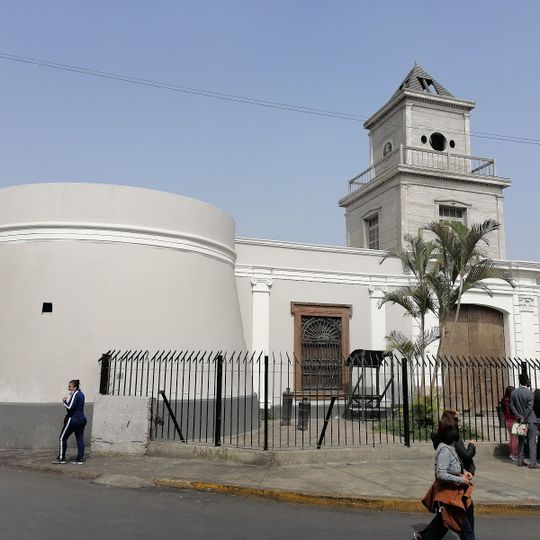
The Fort of Santa Catalina is an adobe fort with neoclassical elements in the Barrios Altos district of Lima, Peru. It has square corner towers and thick outer walls, and inside there are soldiers' quarters, stables, storage rooms, and a chapel.
Construction began on 22 August 1806 under Viceroy José Fernando de Abascal y Souza, directed by artillery inspector Joaquín de la Pezuela, on land leased from the Monasteries of Santa Catalina de Siena and La Concepción. It housed an artillery brigade of 400 veterans and 700 militia, with workshops, stores and a foundry, at a cost of 36,523 pesos. Today the surviving premises host the Escuela Taller de Lima.
The chapel inside is dedicated to Saint Barbara, patroness of explosions, and held images by Matías Maestro, the Basque priest and architect who graduated in law in 1792 and later designed Lima's cemetery. The barracks housed artillerymen, a maestranza and a powder works, and its name comes from the Plazuela de Santa Catalina, not from a martyr.
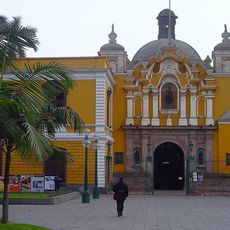
The fort is at Jirón Inambari 790, at the corner with block 12 of Jirón Andahuaylas, on Plazuela de Santa Catalina in Barrios Altos. The remaining premises host the Escuela Taller de Lima. The entrance is a large wooden doorway; inside, a cobblestone entryway leads to the partially restored main courtyard.
Antique cannons are still embedded in the outer walls, showing exactly where the original firing positions were placed. The choice of adobe as the main building material for a military structure in a coastal climate with frequent moisture is itself an engineering decision worth noticing.
The community of curious travelers
AroundUs brings together thousands of curated places, local tips, and hidden gems, enriched daily by 93,282 contributors worldwide.