Island of the Fish, Rock island in Salar de Uyuni, Bolivia
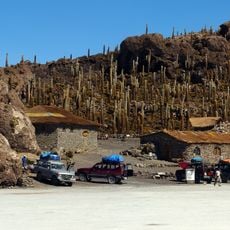
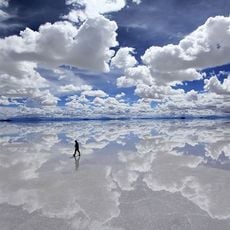
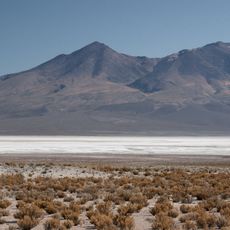
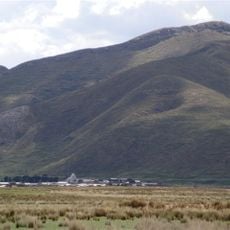
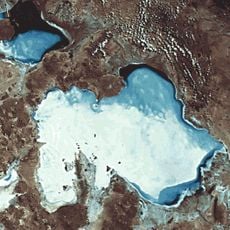
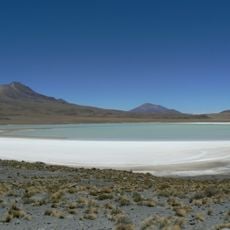
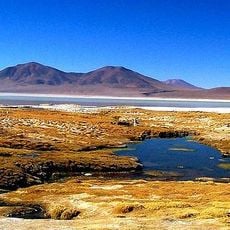
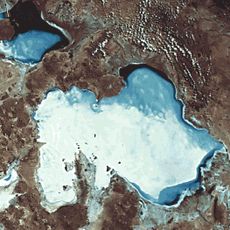
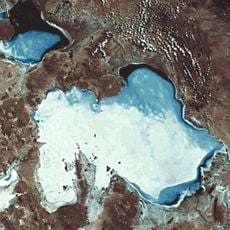
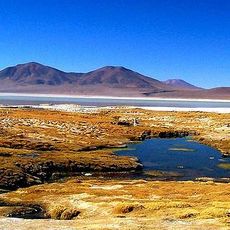
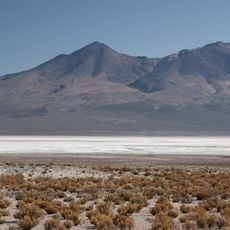
Island of the Fish, also called Isla del Pescado, is a hilly, rocky outcrop rising from the Salar de Uyuni in Potosí Department, Bolivia, at 3,656 metres. It covers 24.62 hectares and is covered with giant cacti (Trichocereus pasacana). Its semi-ellipsoidal profile, seen from east or west and mirrored in the flooded salt flat in January and February, resembles a fish. It is often confused with the neighbouring Isla Incahuasi, 22 km to the southeast.
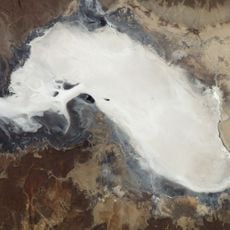
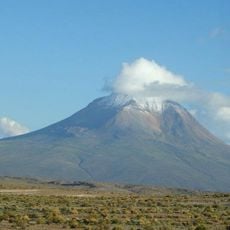
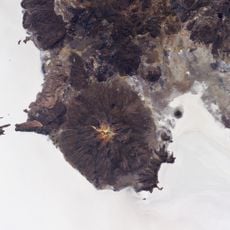
The island is the top of the remains of an ancient volcano, which was submerged when the area was part of a giant prehistoric lake roughly 40,000 years ago. The rock also holds unusual and fragile coral-like structures and deposits that often consist of fossils and algae.
The island is part of a network of rocky outcrops across the salt flats that Aymara communities of the region regard as sacred landmarks. Fossils of ancient sea creatures are visible in the rock surface, and many visitors are surprised to find them here, in the middle of a salt desert.
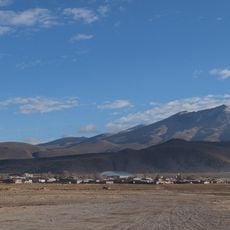
The island is only accessible by crossing the salt flat, typically on a guided tour that departs from Uyuni or nearby Tahua. Bring warm layers and sun protection, as the altitude keeps temperatures low and the open white surface reflects a lot of light.
The giant cacti growing on the island develop at an extremely slow pace, with some of the tallest ones estimated to be over a thousand years old. A walk among them means passing alongside living organisms that were already old when many European cathedrals were being built.
The community of curious travelers
AroundUs brings together thousands of curated places, local tips, and hidden gems, enriched daily by 92,763 contributors worldwide.