Isla Incahuasi, Ancient volcanic outcrop in Salar de Uyuni, Bolivia
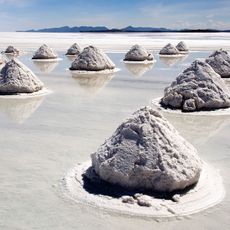
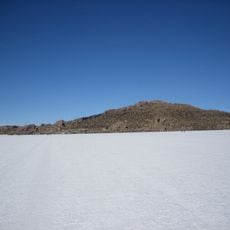
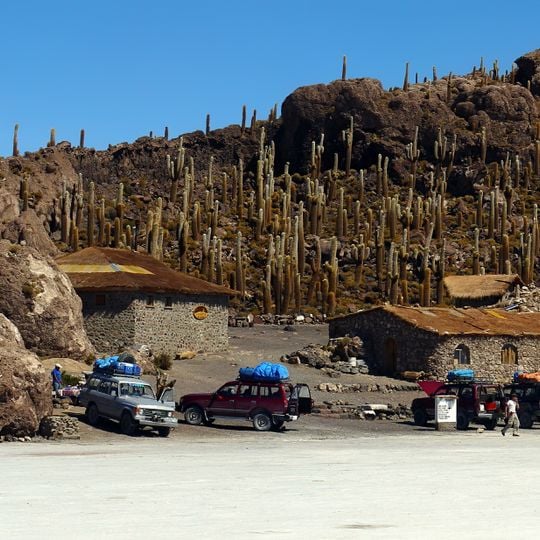
Isla Incahuasi is a rocky outcrop rising about 3,800 meters (12,500 feet) above sea level in the center of the Salar de Uyuni salt flats. Hundreds of giant cacti cover its slopes, creating a striking contrast against the white salt expanse.
This rock island emerged from an ancient volcano when a prehistoric lake dried out over thousands of years. The geological transformation shaped the current salt desert and left behind this formation as evidence of dramatic environmental change.
The name comes from Quechua language and means Inca House, reflecting the indigenous presence in this salt flat region. Walking across the island lets you connect with this ancestral naming that echoes through the landscape.
Visitors reach the island through guided tours departing regularly from Uyuni town throughout the day. The hike on the rock is fairly short, but the terrain is uneven and sturdy footwear is recommended.
The rock contains fossil deposits and coral formations that reveal when this spot lay beneath a vast prehistoric lake. These remains tell a story of deep geological change that you can encounter while walking across the formation.
Location: Daniel Campos Province
Elevation above the sea: 3,822 m
Address: Isla Incahuasi, Bolivia
Website: http://es.wikipedia.org/wiki/Isla_Incahuasi
GPS coordinates: -20.24278,-67.62528
Latest update: December 6, 2025 16:02
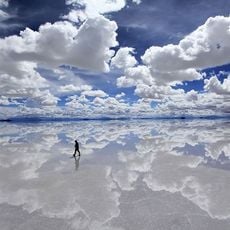
Bolivia sits in the central Andes, linking mountain ranges, high plateau lands, and lowland rainforests in a landlocked country. The changes in altitude create different climate zones and landscapes, from snow-covered peaks to tropical vegetation. Many visitors start in La Paz, a city that clings to a canyon and where a cable car system moves traffic between neighborhoods. The colonial capital of Sucre preserves its white facades and courtyards from the 1600s, while Potosí sits at the foot of Cerro Rico, a mountain that saw centuries of silver mining. The natural sites range from Lake Titicaca on the Peruvian border to the Salar de Uyuni, an expansive salt flat that turns into a shallow mirror during the rainy season. Madidi National Park protects rainforest in the north, while the Eduardo Avaroa Reserve in the south shows colored lagoons and desert formations. The Tiwanaku archaeological site holds evidence of pre-Columbian civilizations, and the Jesuit Missions of Chiquitos are wooden churches that survive in remote towns. The Valley of the Moon near La Paz forms eroded rocks that resemble lunar landscapes, and Torotoro National Park contains fossils and dinosaur tracks. The journey from La Paz to Coroico passes along the Death Road, a narrow mountain route that descends into the Yungas lowlands.
Salar de Uyuni
12.7 km
Salar de Coipasa
111.2 km
Uyuni Railway Scrap Yard
86.4 km
Tunupa volcano
45.7 km
Ollagüe
131.3 km
Island of the Fish
22.1 km
Cariquima
137.3 km
Irruputuncu
110.9 km
Uyuni Salt Flat
18.7 km
Volcán Olca
118.1 km
Salar de Chiguana
124 km
Alto Toroni
124.7 km
Salar de Empexa
94.9 km
Volcán Cariquima
134.2 km
Wila Pukarani
125.1 km
Jaruma
85 km
Tomasamil
122.1 km
Waylla West
119.3 km
Laqaya
64.4 km
Mancha
76.1 km
Cerro Porquesa
120.3 km
Wila Qullu
108.6 km
Thuwa
85 km
Qaral
66.2 km
Luxsar
94.1 km
Wanaku
130.2 km
Jilarata
72.6 km
Iglesia de Cariquima
137.2 kmReviews
Visited this place? Tap the stars to rate it and share your experience / photos with the community! Try now! You can cancel it anytime.
Discover hidden gems everywhere you go!
From secret cafés to breathtaking viewpoints, skip the crowded tourist spots and find places that match your style. Our app makes it easy with voice search, smart filtering, route optimization, and insider tips from travelers worldwide. Download now for the complete mobile experience.
A unique approach to discovering new places❞
— Le Figaro
All the places worth exploring❞
— France Info
A tailor-made excursion in just a few clicks❞
— 20 Minutes