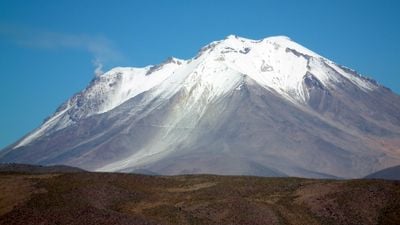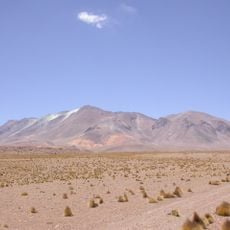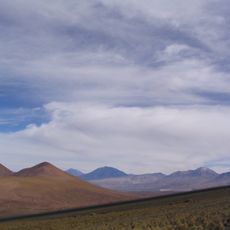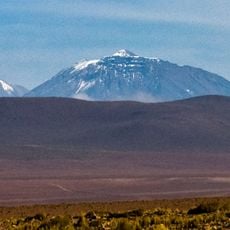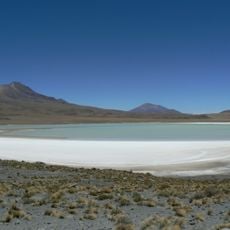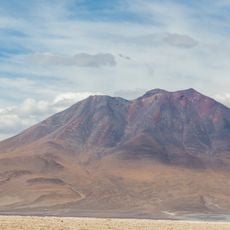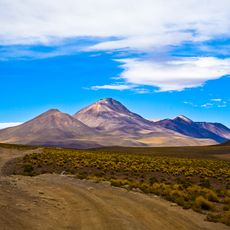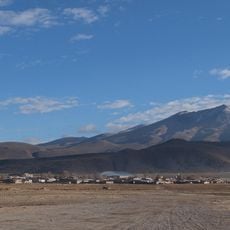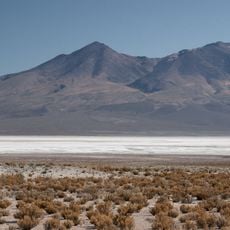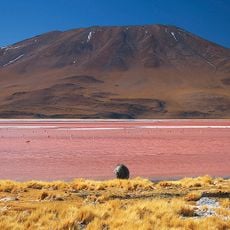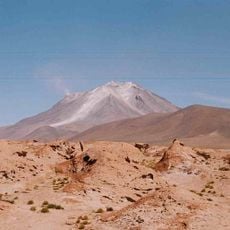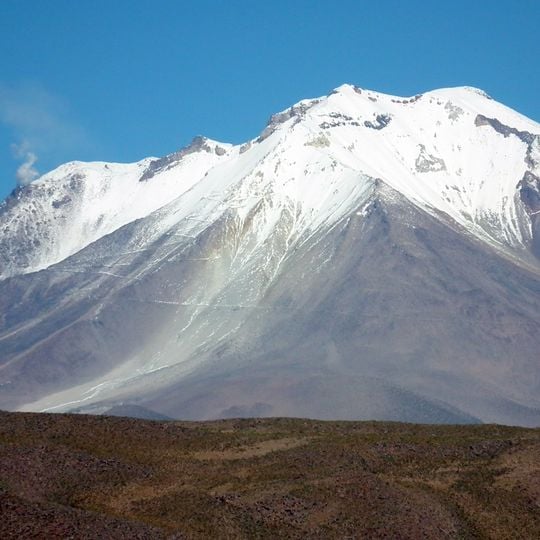
Ollagüe, Stratovolcano in Potosí Department, Bolivia.
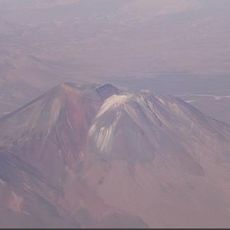
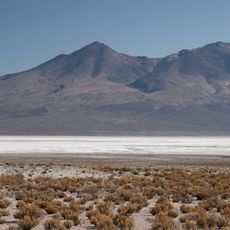
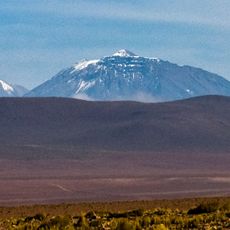
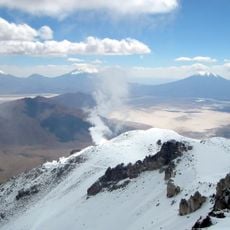
Ollagüe is a stratovolcano rising to 5,868 meters above sea level, situated on the border between Bolivia and Chile in the Andes. The mountain features two notable summit domes on its southern side, where ongoing geothermal activity remains visible.
Geological formation of the mountain began over one million years ago through repeated volcanic eruptions. The last major activity occurred around 65,000 years ago, after which the volcano has been largely quiet but not entirely inactive.
The name comes from the Aymara language, where 'ullaña' means to see and 'wi' indicates a place, reflecting the indigenous roots of the region. This linguistic connection shows how local peoples have long understood and related to this mountain as a landmark in their world.
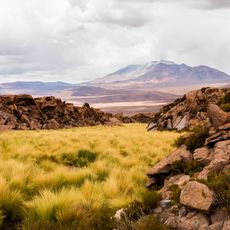
A visit requires high-clearance four-wheel-drive vehicles, as the unpaved road includes many tight turns and climbs to high altitude. Taking time to adjust to the elevation before your visit helps prevent altitude sickness.
A steam plume regularly rises from a fumarole on the southern summit, showing that the magma chamber system beneath remains warm. This visible evidence of inner heat makes the mountain a living example of ongoing geological processes.
The community of curious travelers
AroundUs brings together thousands of curated places, local tips, and hidden gems, enriched daily by 91,983 contributors worldwide.