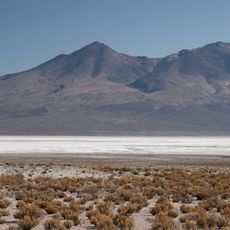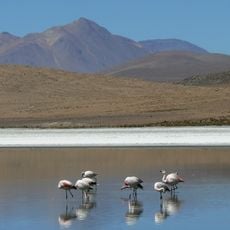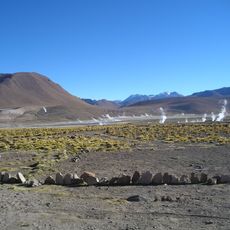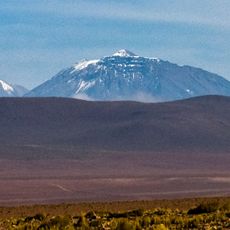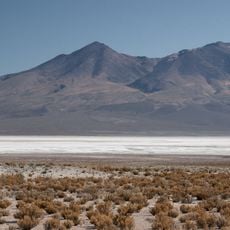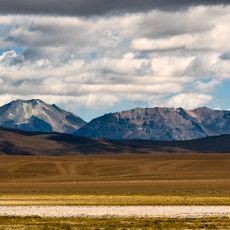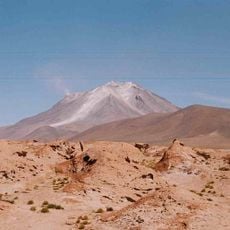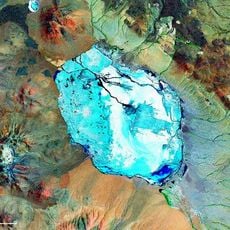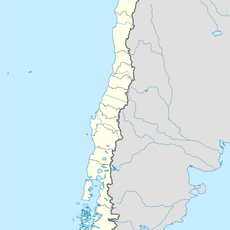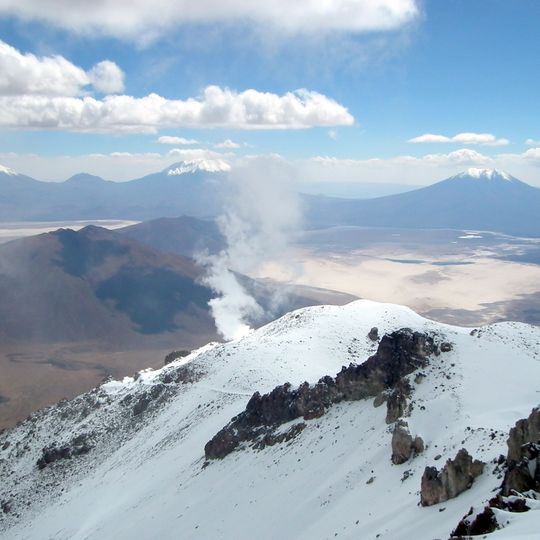
Palpana, Stratovolcano in Antofagasta Region, Chile
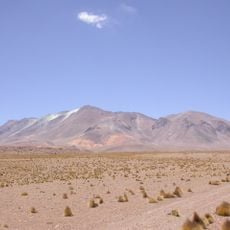
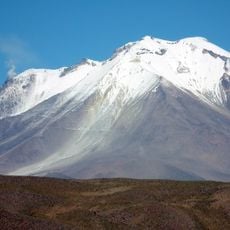
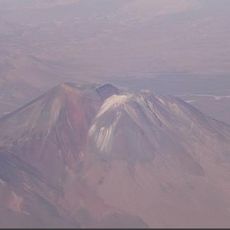
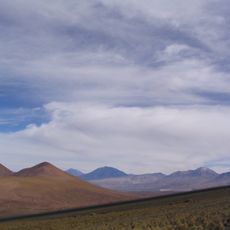
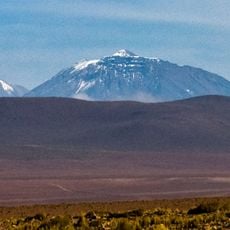
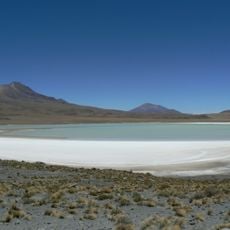
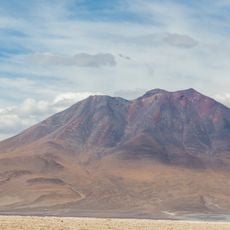
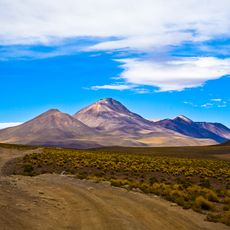
Palpana is a stratovolcano in the Antofagasta Region that rises above 6000 meters in elevation with a wide crater containing multiple lava domes inside. The volcanic slopes display evidence of glaciation at various elevations and feature geomorphological features shaped by past ice movement.
The volcano was first climbed by Chilean mountaineers in 1977, marking an important milestone in the mountain's exploration history. Geological evidence suggests the peak experienced multiple eruptive phases that shaped its current form.
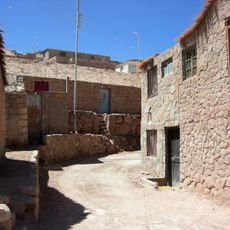
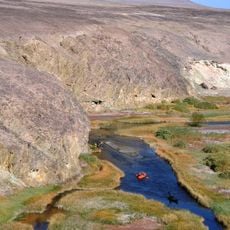
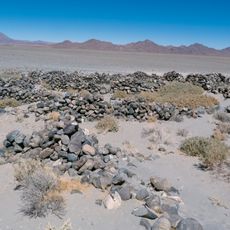
The mountain functions as a water source for local pastoral communities and contains evidence of ancient ceremonial practices at its peak.
Climbing requires preparation for high altitude and mountaineering gear due to steep terrain and possible glacier fields on the slopes. Visitors should expect cold conditions and thin air, and should work with local guides for safe access.
The mountain preserves traces of multiple glaciation phases with different moraine stages that reveal how climate has shifted over time. These glacier remnants at various elevations allow scientists to study the complex climate history of the Andes.
The community of curious travelers
AroundUs brings together thousands of curated places, local tips, and hidden gems, enriched daily by 91,278 contributors worldwide.