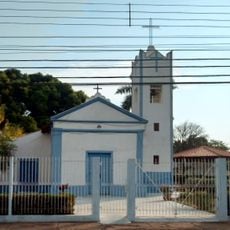
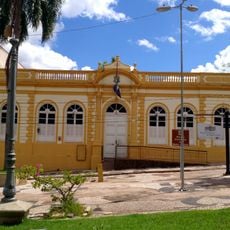
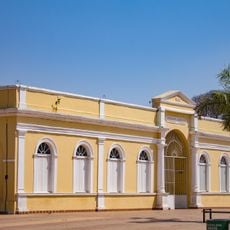
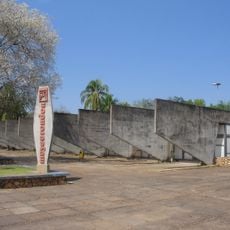
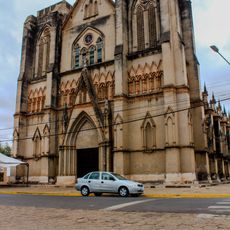
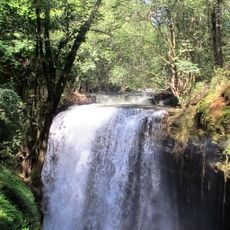
Marco do Jauru, Portuguese colonial monument in Cáceres, Brazil.
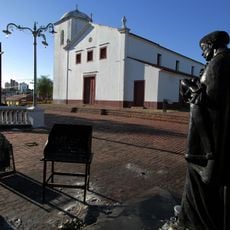
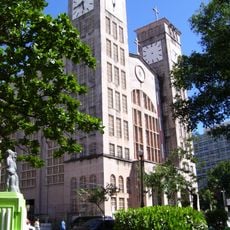
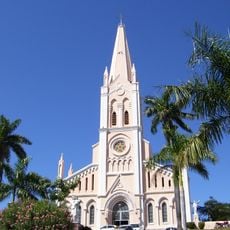
The Marco do Jauru is a lioz limestone monument made in Lisbon, cut into a Portuguese and a Spanish section, and assembled on the Jauru River on 18 January 1754. It was moved in 1883 to the Praça Barão do Rio Branco, in front of Cáceres Cathedral, where it now stands.
The monument was built during Brazil's Portuguese colonial period and originally marked administrative territorial boundaries. Its construction reflects how colonial authorities established control and organization over the city and surrounding region.
The structure displays Portuguese architectural features that still shape how the city looks and feels. It stands as a physical reminder of European influence on local building traditions and urban design.
The monument is located in the city center and is easily accessible on foot. Visitors should look for informational plaques on-site or ask local guides to learn more about its history and significance.
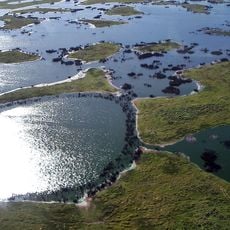
The monument's original site was rediscovered only in May 2009, after eight years of research by a multidisciplinary team led by historian Sandro Miguel da Silva Paula, an Army sergeant. The spot lies 544 m from the mouth of the Jauru River, following coordinates left by mathematician Francisco José Lacerda e Almeida and astronomer Antônio Pires da Silva Pontes Leme on their 1780s expedition.
The community of curious travelers
AroundUs brings together thousands of curated places, local tips, and hidden gems, enriched daily by 93,013 contributors worldwide.