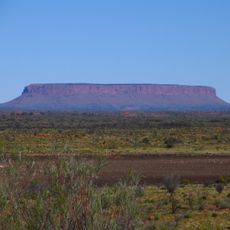
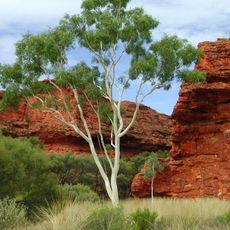
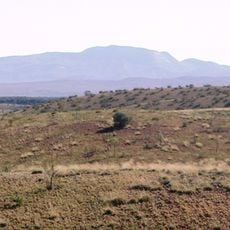
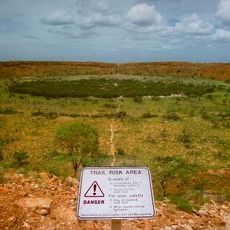
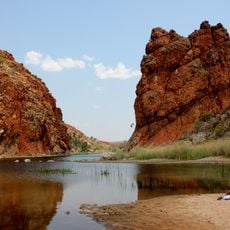
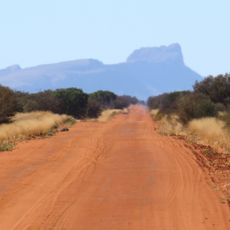
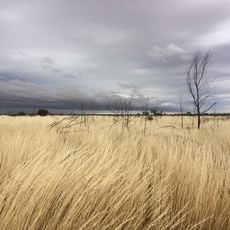
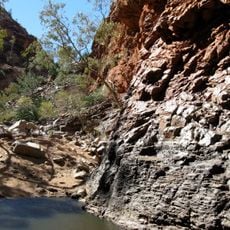
Lake Mackay, Salt lake between Western Australia and Northern Territory, Australia.
Lake Mackay is a salt lake stretching across a vast area between Western Australia and the Northern Territory. The bed is flat and covered with salt deposits, interrupted by scattered islands.
The lake was first documented in 1913 by Christopher Walker during a prospecting expedition, who discovered its dry salt surfaces and scattered islands. This exploration helped map remote areas of inland Australia.
The lake is called Wilkinkarra in the Pintupi language and is where Aboriginal artist Linda Syddick Napaltjarri was born. This place holds deep meaning in the traditions and stories of the local Indigenous people.
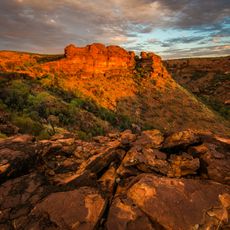
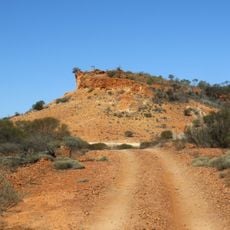
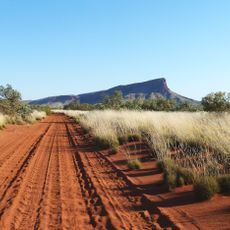
The lake lies on the edge of the Great Sandy Desert, roughly 100 km across east-west and north-south, with brown hills on its eastern half and east-west sand ridges to the south. Its bed is dry salt plain for most of the year, and the white surface reflects strongly. The 2024 ABC report on a proposed potash mine notes a planned haulage curfew on the private access road, so check access conditions before travelling.
The lake is also remembered for a mirage: in 1897 David Carnegie, west of the lake, saw what looked like a great sheet of water stretching 90° of the horizon, though no lake was visible from Mount Webb. The dark patches on the bed mark vegetation, algae and the lowest spots where water pools.
The community of curious travelers
AroundUs brings together thousands of curated places, local tips, and hidden gems, enriched daily by 93,185 contributors worldwide.