Mount Manuk, Volcanic island in the Banda Sea, Indonesia
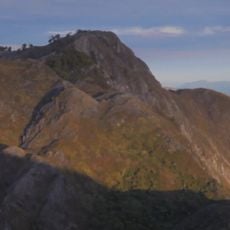
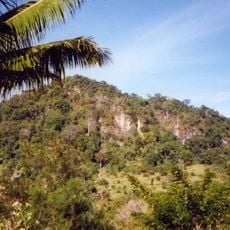
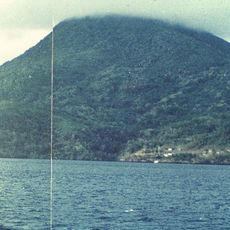
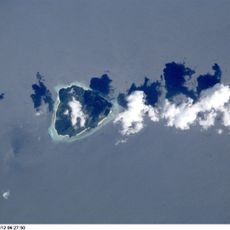
Mount Manuk is an andesitic stratovolcano forming the uninhabited island of Manuk in the Banda Sea. The island covers about one square kilometre, measures roughly 1.4 km long and one kilometre wide, and rises 282 metres above sea level. Its summit holds a crater opening to the southeast, with a block lava flow near the top.
Manuk is the summit of an andesitic stratovolcano that rises 3,000 m from the sea floor. Fumaroles in and on the western rim of its southeast-opening crater were formerly worked by Chinese traders to obtain sulfur. No scientifically confirmed eruption is known; a Challenger expedition participant reported smoke in 1874, and Australian newspapers described a smoke cloud above the island in January and April 1933.
Manuk means "bird" in various Austronesian languages, not specifically Malay. In January and April 1933 passenger ships between Australia and Hong Kong called at the island so travellers could see its great number of birds; reports said some fed on the island's equally numerous snakes.
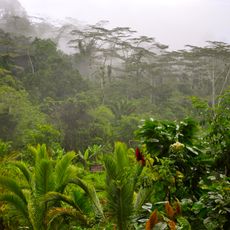
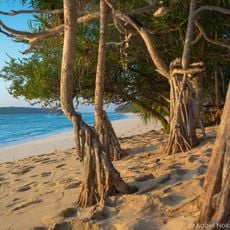
The island is uninhabited, so visitors must bring all supplies and water. The west coast has a small sandy beach and the north coast has forest, while steep cliffs line much of the shore. In June 1930, a passenger ship captain supplied 35 people from Ambon who had drifted off course to Serua and sheltered on Manuk for nearly a month, eating mostly bird eggs.
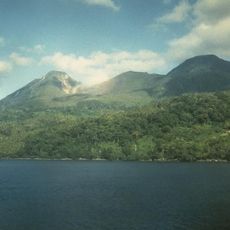
The western flank of the volcano has fumaroles that permanently release sulfur gases, staining the surrounding rock in shades of yellow and orange. This makes it an unusual sight for such a remote and rarely visited island.
The community of curious travelers
AroundUs brings together thousands of curated places, local tips, and hidden gems, enriched daily by 93,359 contributors worldwide.