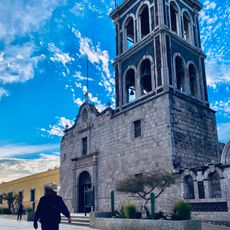
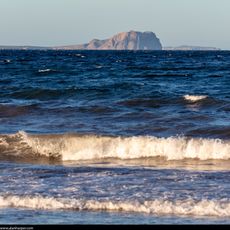
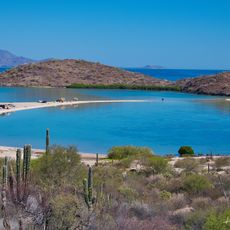
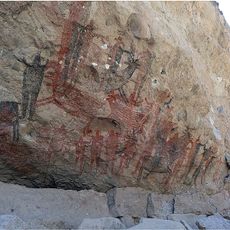
Aguajito, Dormant volcano in Baja California Sur, Mexico.
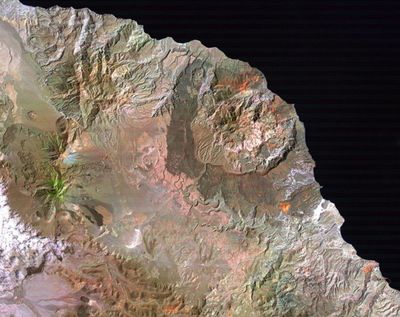
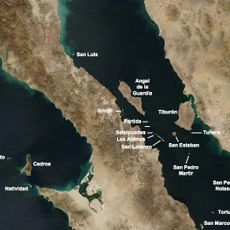
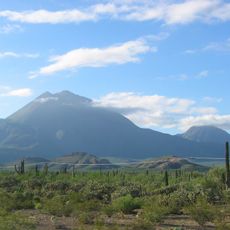
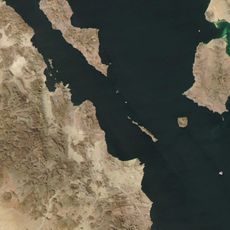
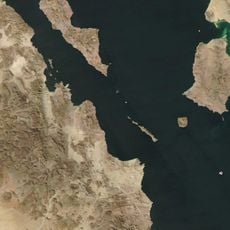
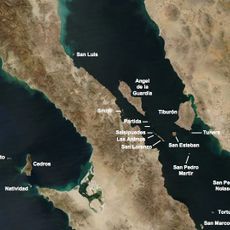
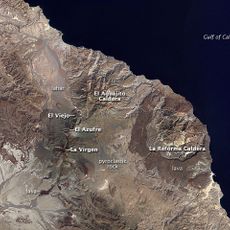
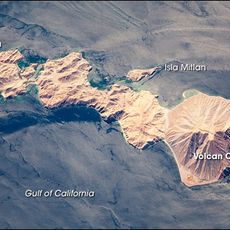
Aguajito is a volcanic caldera approximately 10 kilometers wide situated along the Gulf of California coast in Baja California Sur, featuring rhyolitic lava domes along its northern rim and active hot springs on its southern margin.
The massive caldera formed approximately 760,000 years ago during a super-volcanic eruption that deposited ignimbrites primarily into the Gulf of California, with subsequent lava dome formation occurring around 500,000 years ago on the northern boundary.
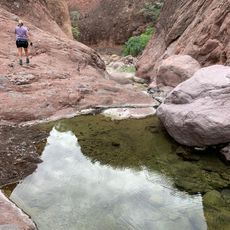
The name Aguajito refers to a small aguaje, a desert spring or waterhole, a reference to the hot springs at the caldera's southern end. The caldera is also called Santa Ana. The Cimarron fault line crosses the caldera centre from north-northeast to south-southwest, and geothermal exploration there recorded seismic activity.
Accessing Aguajito requires navigating remote terrain with limited infrastructure, and visitors should prepare for rugged conditions while exercising caution due to ongoing geothermal activity and potential seismic instability in the area.
The Cimarron fracture zone cuts through the centre of the caldera from north-northeast to south-southwest. Seismic activity was recorded during geothermal exploration of the site, and hot springs sit at the caldera's southern end.
The community of curious travelers
AroundUs brings together thousands of curated places, local tips, and hidden gems, enriched daily by 94,630 contributors worldwide.