Laguna Ojo de Liebre, Nature reserve and UNESCO World Heritage Site in Baja California Sur, Mexico
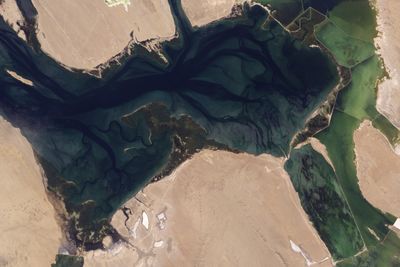
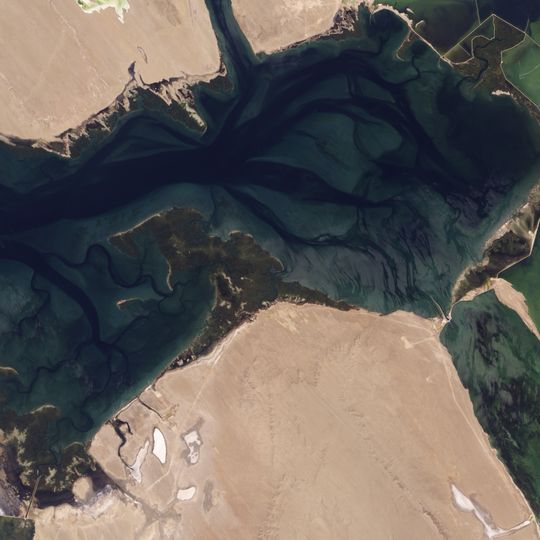
Laguna Ojo de Liebre is a large, shallow coastal lagoon in Mulegé Municipality, Baja California Sur, measuring 48 km long, 9 km wide and 5 to 12 m deep. Relatively deep channels cut between broad intertidal flats, and coastal dunes 12 to 15 m high border sandy beaches. On the eastern side, rectangular evaporation ponds and salt flats built by Exportadora de Sal S.A. enclose shallow brine pans.
In December 1857 Charles Melville Scammon entered the lagoon on the brig Boston and caught twenty gray whales. He returned in 1858–59 with the Ocean Bird and schooner-tenders A.M. Simpson and Kate, taking 47 cows that yielded 1,700 barrels of oil; six other vessels added 5,300 barrels. Eleven ships visited in 1859–60, but the catch fell, and after the Louisa took only 70 barrels in 1872–73 the lagoon was abandoned.
The lagoon holds deep meaning for local fishing communities who have lived alongside its waters for generations. People here balance their traditional livelihoods with conservation efforts that protect the place for the future.
The lagoon lies near Guerrero Negro in Mulegé Municipality, opening into the Pacific; boat access is closely controlled, so trips are arranged locally rather than independently. The eastern side holds the evaporation ponds and channels of the Exportadora de Sal saltworks, while the western shore is bordered by dunes 12 to 15 m high and sandy beaches.
The saltworks, Exportadora de Sal S.A., pumps seawater into concentration ponds covering 33,000 hectares on the lagoon's eastern side. Its discharge of bittern, a leftover brine, was linked to the deaths of 94 green turtles found in December 1997; the bittern held over 100 mg of fluoride per litre, about 60 times the level in seawater.
The community of curious travelers
AroundUs brings together thousands of curated places, local tips, and hidden gems, enriched daily by 92,744 contributors worldwide.