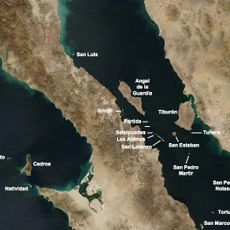
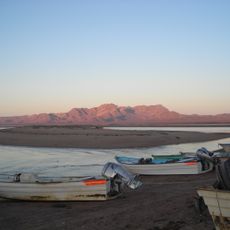
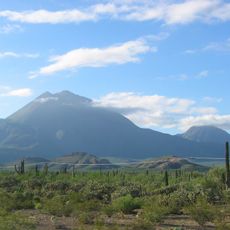
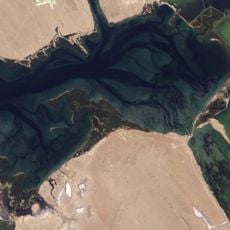
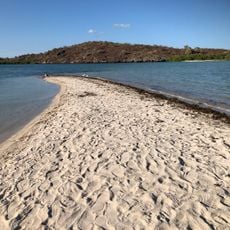
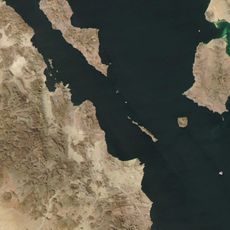
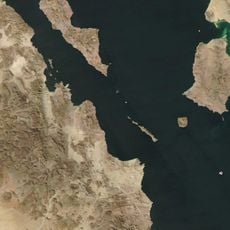
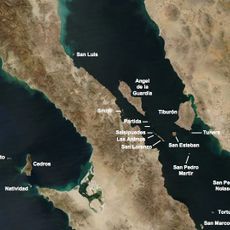
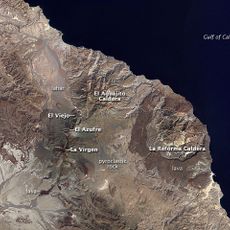
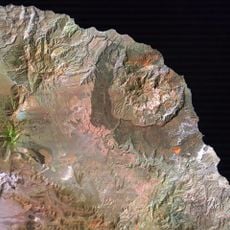
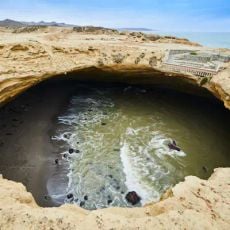
Coronado, Volcano on Isla Smith, Gulf of California, Mexico.
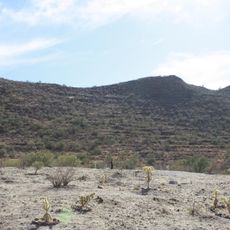
Coronado is a stratovolcano rising 474 m on Isla Coronado, a 7 km-long island just off the Baja California Peninsula near Bahía de los Ángeles. The cone, built mainly of basalt and andesite, stands at the northern end of the arid, sparsely vegetated island. Its summit crater measures about 200 m across.
Coronado is a stratovolcano built mainly of basalt and andesite on the northern end of Isla Coronado. Its summit crater measures about 200 m across. Gas and steam activity was last recorded in 1539, and fumarole activity increased in 1895.
The island is uninhabited, but its waters draw visitors: in 1940 marine biologist Ed Ricketts and author John Steinbeck collected intertidal specimens at Coronado and Bahía de los Ángeles for The Log from the Sea of Cortez. Since the late 1990s local groups, backed internationally, have run a management and conservation plan for the bay's islands, aimed at pressure from fishing and tourism.
Getting there requires a boat trip from coastal towns in Baja California, with conditions heavily dependent on weather and sea state. Visitors should be prepared for unpredictable ocean conditions and plan visits only during stable periods.
The island is uninhabited and hosts seven reptile species, among them the spiny chuckwalla (Sauromalus hispidus) and the speckled rattlesnake (Crotalus mitchellii). In 1940 Ed Ricketts and John Steinbeck included Coronado and Bahía de los Ángeles in their Gulf of California collecting trip, recorded in The Log from the Sea of Cortez.
The community of curious travelers
AroundUs brings together thousands of curated places, local tips, and hidden gems, enriched daily by 94,630 contributors worldwide.