Misión Santa Rosalía de Mulegé, Mission station in Mulegé, Mexico
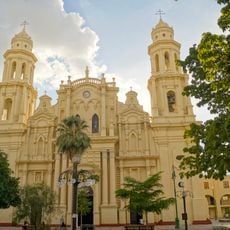
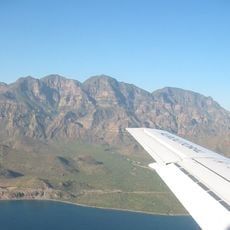
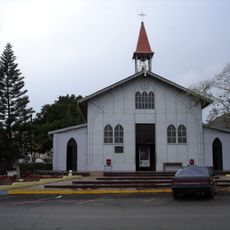
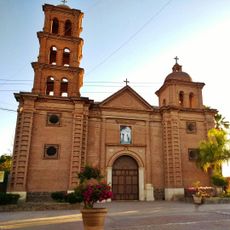
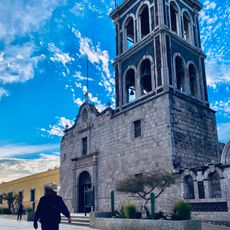
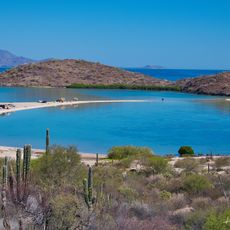
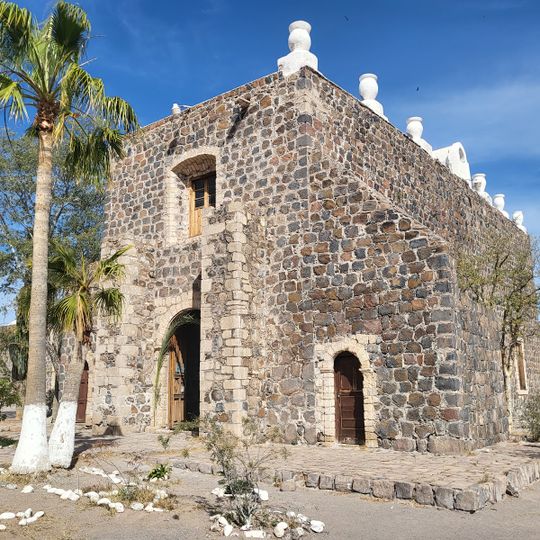
Misión Santa Rosalía de Mulegé is a mission station in Mulegé featuring thick stone walls and arched windows in Spanish colonial style. The structure stands at the entrance to Bahía de Concepción with a church layout typical of 18th-century religious buildings.
The mission was founded in November 1705 by the Jesuit Juan Manuel de Basaldúa on the instructions of Juan María de Salvatierra, funded by Nicolás de Arteaga and his wife Josefa Vallejo, at a Cochimí settlement called Caaman Cagaleja. Basaldúa built a chapel, a house and a dam. A hurricane in 1717 ruined the fields; the stone church was begun in 1754 by Francisco Escalante and finished in 1766. After the Jesuits were expelled in 1767 the Franciscans took over, then the Dominicans in 1773, and the mission was abandoned in 1828 for lack of population.
The name Mulegé comes from the Cochimí expression Caaman Cagaleja, which the sources translate as "great ravine of the white mouth". The mission is also named for Saint Rosalia. The Jesuits introduced vines, cotton and date palms, grown using the oasis and the Mulegé arroyo.
The church stands in the oasis of Mulegé, near the entrance of Bahía de Concepción on the Gulf of California coast. The stone temple begun in 1754 and finished in 1766 keeps its exterior masonry and barrel-vault roof after INAH restoration work in 1972 and 1973. Look for the apparent stone masonry of the walls and the continuous barrel vault.
The mission was a staging point for founding the missions of San Ignacio de Kadakaamán and La Purísima. A hurricane in 1717 destroyed the fields that fed the settlement, and by 1770 the mission was virtually deserted despite some 300 Cochimí neophytes recorded in 1768.
The community of curious travelers
AroundUs brings together thousands of curated places, local tips, and hidden gems, enriched daily by 92,772 contributors worldwide.