Ujuxte, Maya archaeological complex in Retalhuleu, Guatemala
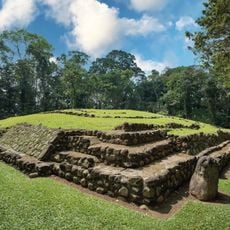
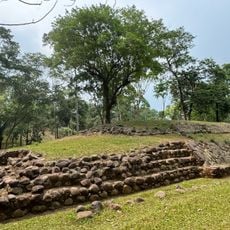
Ujuxte is a Maya archaeological complex in Retalhuleu with roughly 200 earthen mounds scattered across farmland. The structures cluster around a central ceremonial plaza that forms the core of this ancient settlement.
Ujuxte was probably founded around 1200 BC and occupied until about AD 200, when it was abandoned in favour of Takalik Abaj to the east. The Ujuxte Archaeological Project, begun by E. M. Shook and the Universidad de San Carlos de Guatemala, investigated the growth and collapse of early states after the decline of La Blanca.
The name Ujuxte comes from the Ramón or breadnut tree (Brosimum alicastrum). The central plaza holds Mound 1 at 20 m and Mound 2 at 16 m, with an early ballcourt formed by Mounds 3 and 4, each over 7 m tall. Its axis faces sunrise on the spring and fall equinoxes, and on the summer solstice the sun rises behind the Tajumulco volcano in line with the plaza.
The site sits within farmland and benefits from a local guide to safely explore all areas. Visitors should prepare for uneven terrain and limited pathways.
At summer solstice, the sun rises directly above the central plaza with Tajumulco volcano as a backdrop. This celestial alignment appears to have been deliberately built into the site's design.
The community of curious travelers
AroundUs brings together thousands of curated places, local tips, and hidden gems, enriched daily by 92,778 contributors worldwide.