Chiribiquete National Park, Protected rainforest in Caquetá and Guaviare, Colombia.
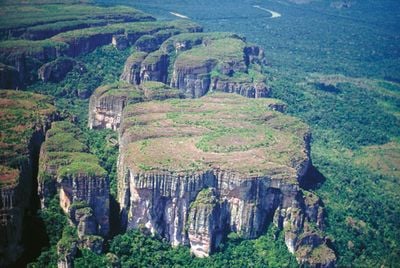
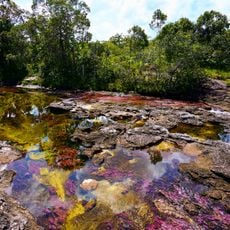
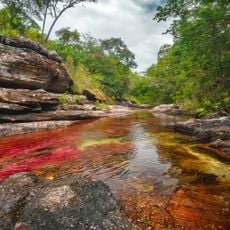
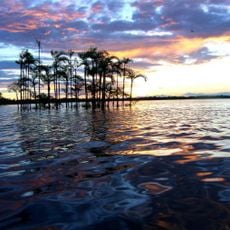
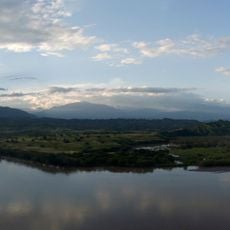
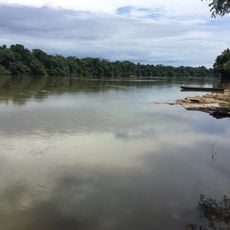
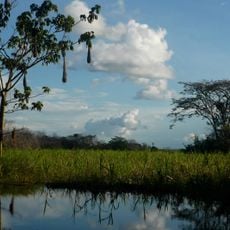
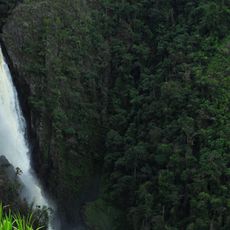
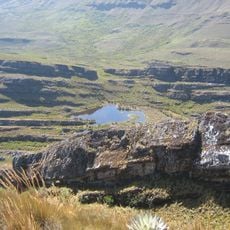
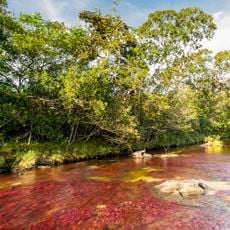
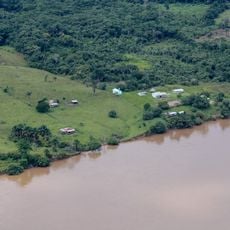
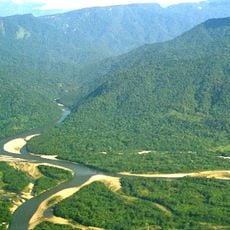
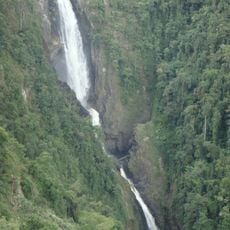
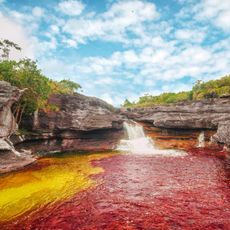
Chiribiquete National Park covers 4,268,095 hectares in the departments of Caquetá and Guaviare. Its landscape combines tropical moist forest, savannas and blackwater rivers with tepuis, flat-topped sandstone table mountains whose summits are covered in patchy vegetation over reddish-brown ground and whose pale grey and tan cliffs drop sheer to the forest.
The Colombian government established the park in 1989 to protect the rainforest. It has been expanded twice since then, making it one of the largest tropical forest reserves in the world.
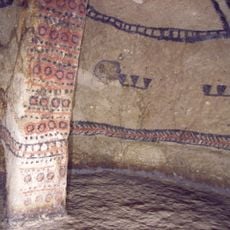
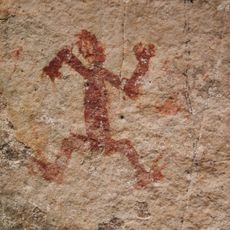
The rock art fills more than 60 shelters, with over 75,000 petroglyphs and pictographs recorded; some paintings were first photographed by geologist Jaime Galvis in 1986-1987. Research by Carlos Castaño-Uribe and Thomas van der Hammen followed in 1990-1992. Painting continued until the 16th century, and uncontacted peoples in the park still make rock art today.
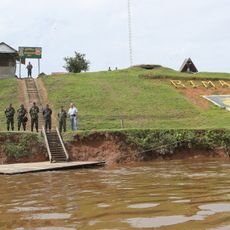
The park lies in the northwest Colombian Amazon, in Caquetá and Guaviare departments, with boundaries formed by the Apaporís, Mesay and Yari rivers. Access is by river or light aircraft; there are no roads or visitor facilities. Rainfall is lowest between December and February and highest from April to July, and daytime temperatures can reach 32 °C.
The rock paintings were first photographed by geologist Jaime Galvis in 1986–1987, and Carlos Castaño-Uribe and Thomas van der Hammen studied them from 1990 to 1992. In 2014 filmmaker Mike Slee and photographer Francisco Forero Bonell filmed the paintings on the vertical rock faces.
The community of curious travelers
AroundUs brings together thousands of curated places, local tips, and hidden gems, enriched daily by 92,813 contributors worldwide.