Palmar Sur Archeological Excavations, Archaeological complex in Palmar Sur, Costa Rica
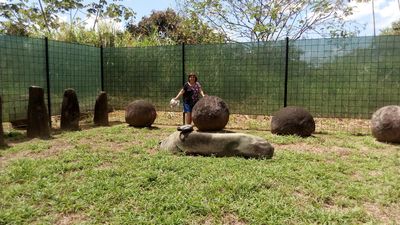
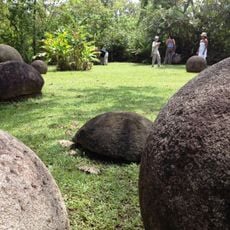
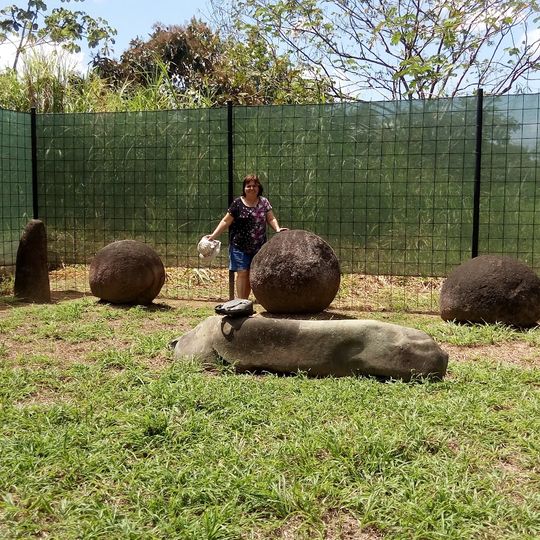
Finca 6, part of the Palmar Sur excavations, covers about 10 hectares of the Diquís Delta alluvial plain, 4 km southwest of Palmar Sur. It holds two in-situ alignments of three stone spheres each, plus two earthen mounds faced with rounded river cobbles. The site also stores spheres returned to the National Museum.
The spheres were uncovered in the 1930s as the United Fruit Company cleared jungle for banana plantations; workers pushed them aside with bulldozers and, seeking hidden gold, drilled and dynamited several before authorities intervened. Doris Stone published the first scientific study in 1943, which drew Samuel Lothrop of Harvard's Peabody Museum, who excavated in the Diquís Delta and published his findings in 1963. In June 2014 the chiefdom settlements with stone spheres were inscribed as a UNESCO World Heritage Site.
The name Finca 6 comes from the numbering the United Fruit Company gave its banana farms. In the visitor centre, the exhibition "Dív Crív: cacicazgos en el Delta del Diquís" introduces the chiefdoms before you reach the two in-situ alignments of three spheres each.
The site lies about 4 km southwest of Palmar Sur, at an elevation of roughly 10 m, on the grounds of the former United Fruit Company farm. The outdoor museum opened on 7 December 2013, and the visitor centre holds the exhibition "Dív Crív: cacicazgos en el Delta del Diquís". The climate is hot and humid, with a dry season from December to March and rain the rest of the year.
The spheres were made by hammering natural boulders with other rocks and then polishing them with sand, so no carving tools were needed. The gabbro came from hills several kilometres away, and unfinished spheres still lie at those quarry sites.
The community of curious travelers
AroundUs brings together thousands of curated places, local tips, and hidden gems, enriched daily by 94,027 contributors worldwide.