Aguada Fénix, Archaeological site in Balancán, Mexico.
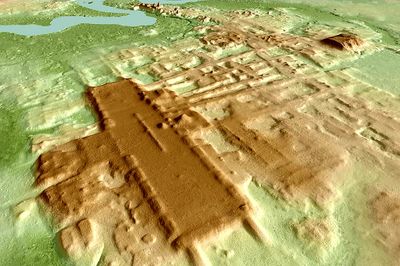
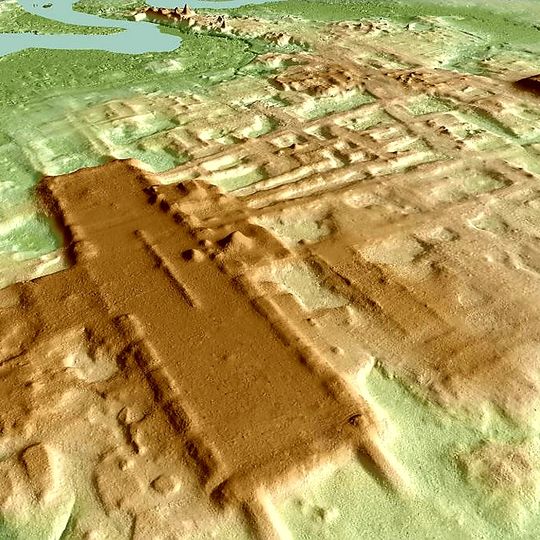
Aguada Fénix is an archaeological site in Balancán featuring an enormous rectangular platform that spans a considerable distance and rises several meters above ground. The complex was connected by nine straight pathways radiating outward from a central area.
The site was built between 1000 and 800 BC and is among the oldest known constructed complexes in the Maya region. It emerged long before the rise of later Maya cities and shows that early communities could organize major projects without centralized rule.
The site's name, Aguada Fénix, refers to a water source in the area. Excavations found jade axes and other symbolic objects placed in the center of the plateau, suggesting the site was a ceremonial destination for large gatherings. No residential sections have been identified, and the only sculpture found is a limestone image of an animal, possibly a white-lipped peccary or a coatimundi.
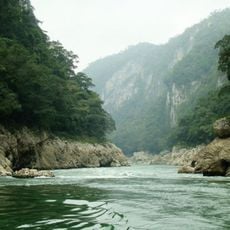
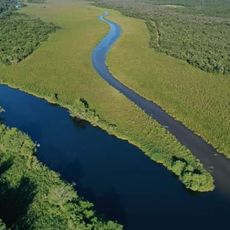
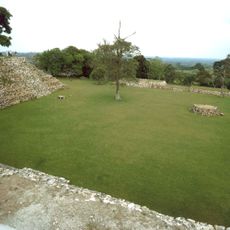
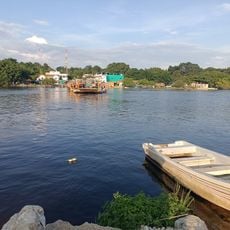
The site is closed to the public while exploration and research continue, so it cannot be visited; the platform is on private land near the San Pedro River in Balancán and is partly wooded and used for cattle ranching. The earthworks are best perceived from the air or in LiDAR maps, since from ground level the huge platform looks like part of the natural landscape.
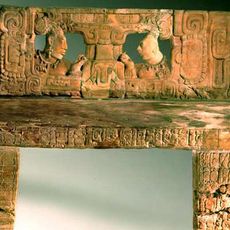
Only one sculpture has been found at Aguada Fénix: a limestone image of an animal, possibly a white-lipped peccary or a coatimundi. No sculptures of high-status individuals appear, unlike at Olmec centres such as San Lorenzo and La Venta, which archaeologists read as weaker social inequality here.
The community of curious travelers
AroundUs brings together thousands of curated places, local tips, and hidden gems, enriched daily by 93,846 contributors worldwide.