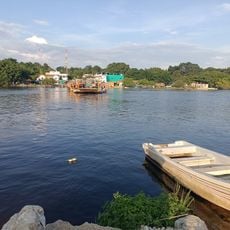
La Corona, Pre-Columbian Maya archaeological site in Petén, Guatemala
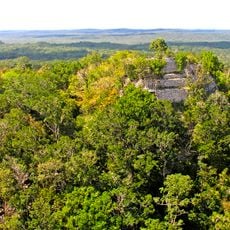
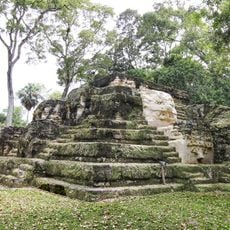
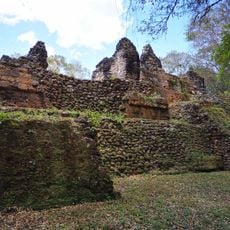
La Corona is a Maya archaeological complex in Petén featuring five temples arranged in a crown-like pattern around a central plaza. The site includes numerous smaller buildings and structures dating to the Classic Period.
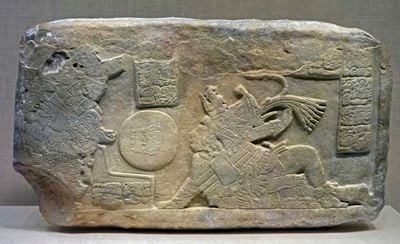
The site developed during the Classic Maya Period and remained unknown to archaeologists for centuries. It was identified in 1996 as the mysterious Site Q after fine limestone reliefs began appearing in international art markets.
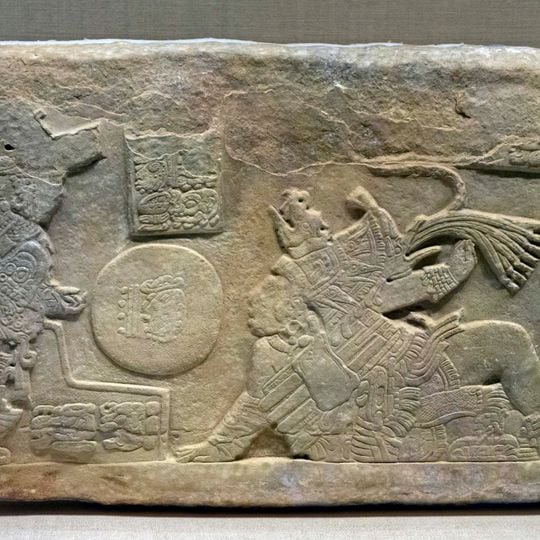
The site's ancient name was Sak-Nikte', meaning White Flower. Its modern name comes from five temples whose layout resembles a crown. Sculpted panels record royal women from Calakmul marrying La Corona kings, including a daughter of Yuknoom Ch'een in 679 AD and a daughter of Yuknoom Took' K'awiil in 721 AD.
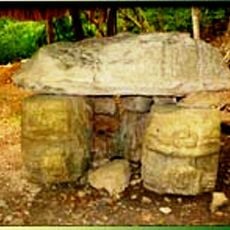
The site is partially accessible as ongoing excavations have revealed only portions of the city. Many structures are undergoing preservation work and remain restricted from visitor access.
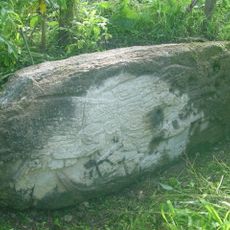
In April 2012 the La Corona Archaeological Project uncovered a row of 12 staircase risers carved with different relief scenes; another 10 sculpted risers had been looted and then discarded as too eroded to sell. One block, Hieroglyphic Staircase 2, Block 5, cites the date 4 Ahau 3 K'ank'in, the 13th baktun ending.
The community of curious travelers
AroundUs brings together thousands of curated places, local tips, and hidden gems, enriched daily by 94,393 contributors worldwide.