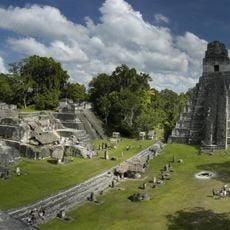
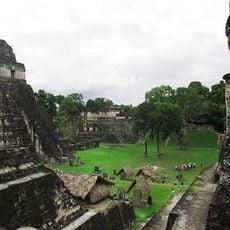
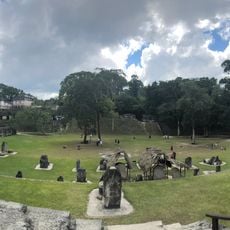
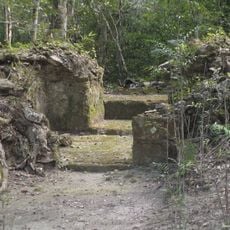
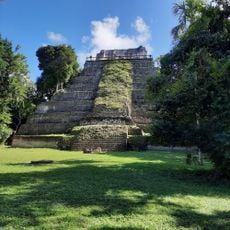
Tikal Temple IV, Mesoamerican pyramid in Tikal, Guatemala
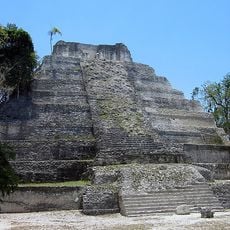
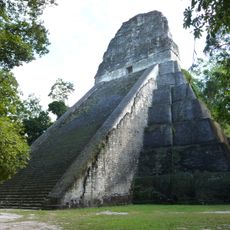
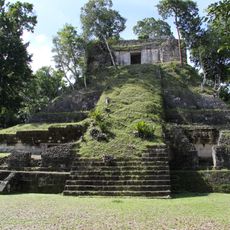
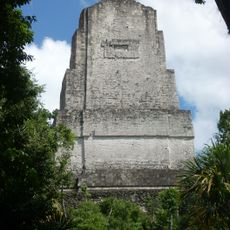
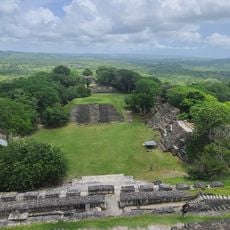
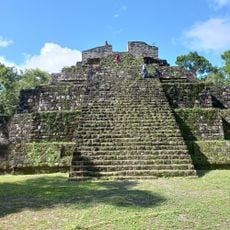
Temple IV stands 64.6 metres from its supporting platform to the top of the roof comb, with a rectangular base aligned north–south and seven stepped levels with slanting talud walls. The summit shrine faces east toward the site core, its exterior walls rising vertically to a frieze that held three giant stone mosaic masks. The roof comb, 12.86 metres high, was hollowed by internal chambers.
The temple was built in 741 CE under Maya ruler Yik'in Chan K'awiil, marking the peak of Tikal's architectural achievement. This construction period coincided with the city's greatest power and prosperity.
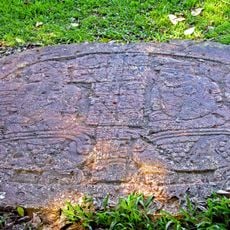
The summit shrine displays stone mosaic masks and carved lintels depicting military victories and royal ceremonies of the Maya. These artworks help visitors understand the power and wealth of the ancient rulers who once governed here.
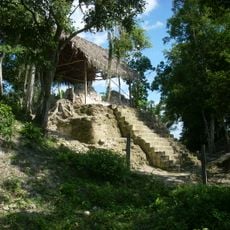
Wooden stairs lead to the upper levels, with the eastern stairway serving as the main climbing route. The ascent requires physical effort but rewards visitors with views across the entire archaeological site and surrounding jungle.
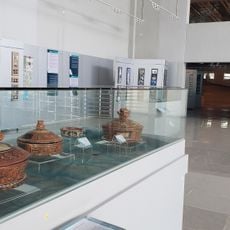
The two carved sapodilla-wood lintels from the summit shrine were removed in 1877 by Gustav Bernoulli and are now in the Ethnographic Museum in Basel. The wood weighs 1120 kg/m³, and the lintels were carved elsewhere, then hauled up and installed before the shrine was roofed.
The community of curious travelers
AroundUs brings together thousands of curated places, local tips, and hidden gems, enriched daily by 93,778 contributors worldwide.