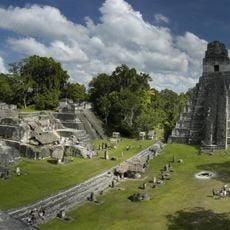
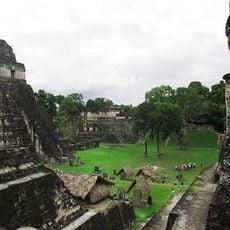
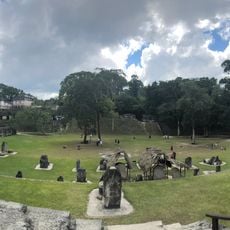
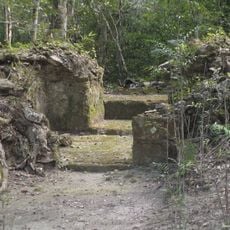
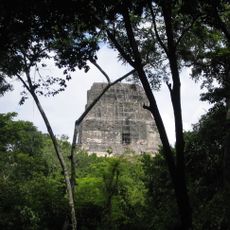
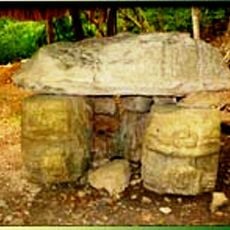
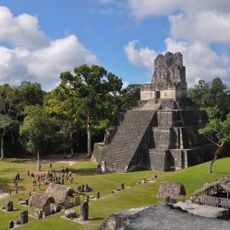
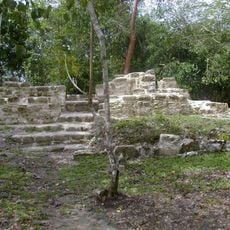
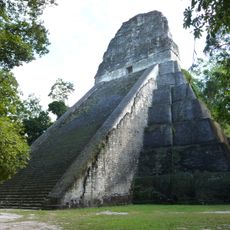
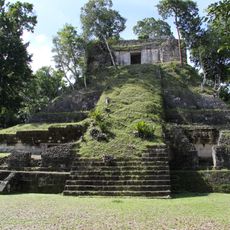
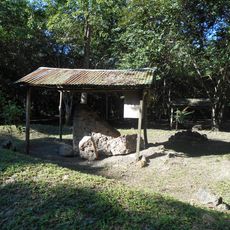
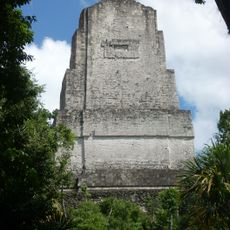
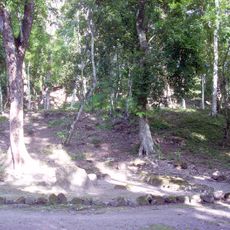
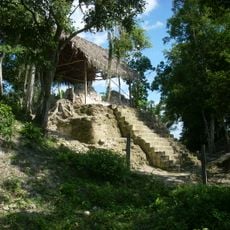
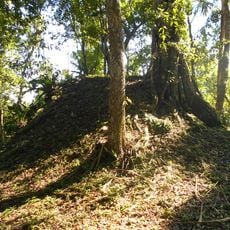
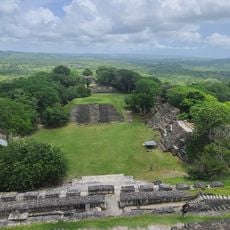
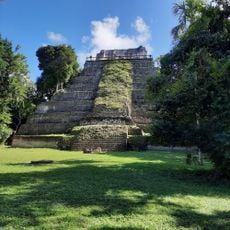
Tikal Temple 33, Funerary pyramid in Tikal, Guatemala.
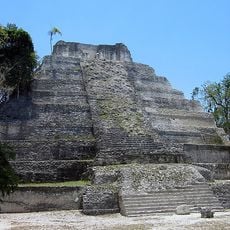
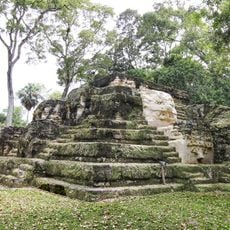
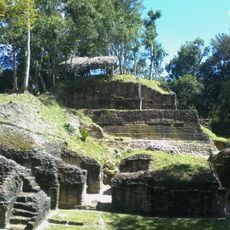
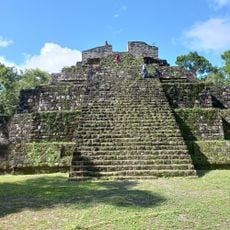
Temple 33 was a 33-metre-high funerary pyramid in the North Acropolis of Tikal, placed between Temples 32 and 34 facing the Great Plaza. Its earliest version was a low shrine over the tomb of king Siyaj Chan K'awiil II, sealed in AD 457, with stucco masks over 3 metres high flanking the access stairway. Two later building phases added a new superstructure and panelling before the final pyramid was raised during the Tikal Hiatus.
Temple 33 was built over the bedrock tomb of king Siyaj Chan K'awiil II, sealed in AD 457. It went through three construction phases: an Early Classic shrine with stucco masks over 3 m high, an intermediate superstructure, and a 33 m pyramid raised during the Tikal Hiatus (AD 562–692). Archaeologists dismantled the final version in 1965, a decision Heinrich Berlin attacked in 1967.
The temple blended architectural elements from both Maya and Teotihuacan traditions in its design and construction methods. This mixing of styles shows the cultural connections that existed between these two distant civilizations.
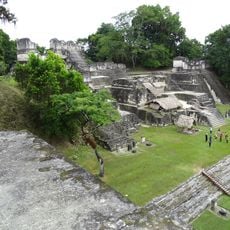
The pyramid is not directly accessible to visitors because archaeologists disassembled it in 1965 to study its construction in detail. You can still walk through Tikal's grounds and see other buildings in the North Acropolis to understand the area's architectural development.
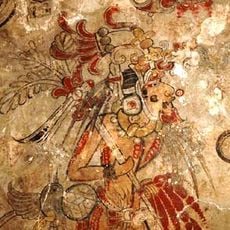
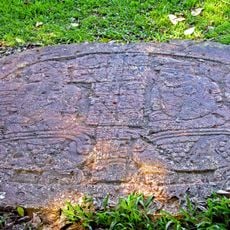
Stela 31 is not a panel but the upper two-thirds of a broken stela, dedicated in AD 445 and reburied above Siyaj Chan K'awiil II's tomb during the third construction phase. It shows the king with his father Yax Nuun Ayiin I, depicted three times, including as a Teotihuacano warrior and as the ancestral sun god. Its rear text legitimises the king's rule through his mother's line.
The community of curious travelers
AroundUs brings together thousands of curated places, local tips, and hidden gems, enriched daily by 93,779 contributors worldwide.