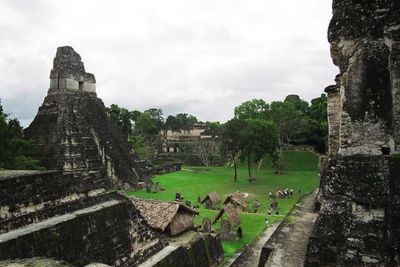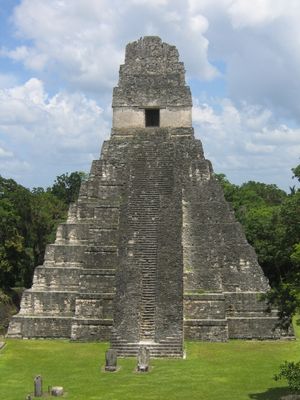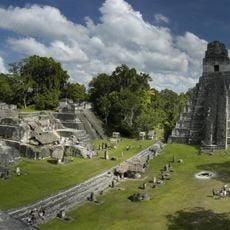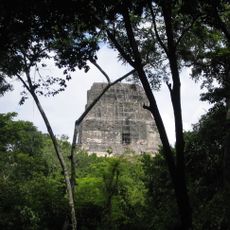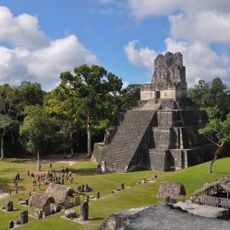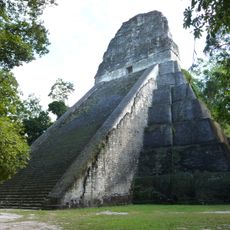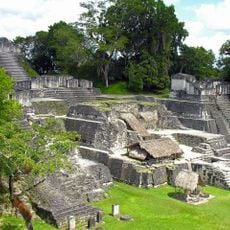
Tikal Temple I, Maya temple in Tikal, Guatemala.
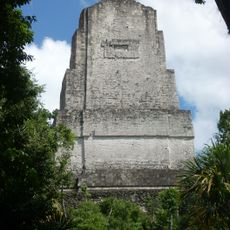
Tikal Temple I is a limestone stepped pyramid rising 47 meters in nine terraces, with a single steep central staircase from base to summit. At the top, a sanctuary holds three narrow, dark chambers in a row, entered through one doorway and roofed by corbel vaults supported by sapodilla-wood beams. A roof comb once carried a giant sculpture of the seated ruler Jasaw Chan Kʼawiil I, now hard to discern.
Jasaw Chan Kʼawiil I ruled Tikal from 682 to 734, and his son and heir Yikʼin Chan Kʼawiil oversaw the construction of Temple I around his father's tomb, which was built around the burial chamber. The tomb, found in 1962 as Burial 116, held jade ornaments, painted ceramics and 37 engraved bones. The temple was completed around 740–750.
The name comes from a carved wooden lintel showing a ruler seated on a jaguar throne, though the outer lintel was plain and the carved ones were inside. The temple was considered a gateway to the underworld, and on 21 December 2012 modern Maya held a fire ceremony before it on the Main Plaza, attended by about 3,000 people.
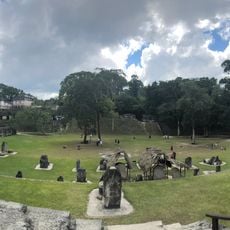
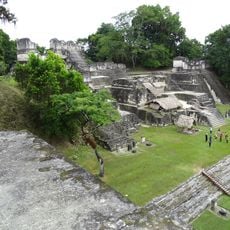
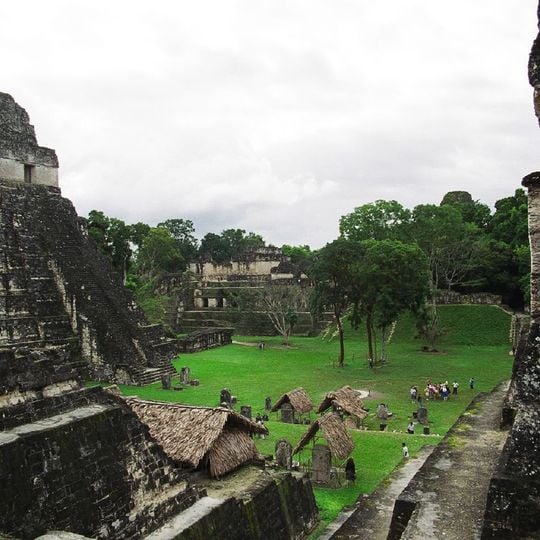
The pyramid stands on the east side of the Main Plaza, and its base can be viewed from the plaza floor. The main staircase is closed to climbing because of the risk; access to the upper sanctuary is not permitted. Partial restoration was carried out in the 1990s under an agreement between the governments of Guatemala and Spain.
The burial chamber held jade jewelry, painted ceramics, and 37 engraved human bones inscribed with hieroglyphic texts. These inscriptions record political alliances with neighboring cities and court ceremonies.
The community of curious travelers
AroundUs brings together thousands of curated places, local tips, and hidden gems, enriched daily by 93,811 contributors worldwide.