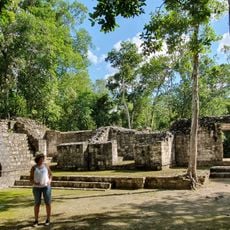
Calakmul, Maya archaeological complex in Campeche, Mexico
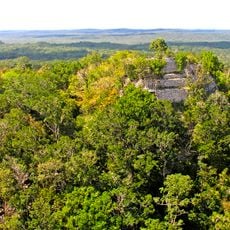
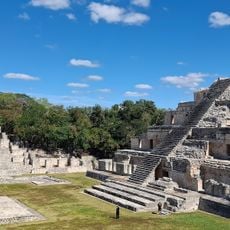
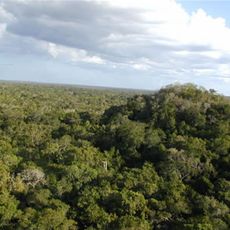
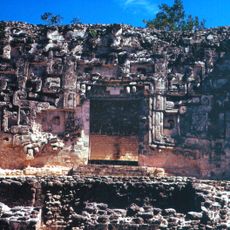
Calakmul is an ancient complex of thousands of stone buildings spread across more than 70 square kilometers in the tropical lowlands of Campeche. The site includes large temple staircases, residential zones with low platforms, and wide plazas surrounded by trees and vegetation.
Calakmul was occupied from the Middle Preclassic through the Late Postclassic, about 1,500 years. In the Late Classic it was the capital of the Kaan kingdom, with a population estimated at 50,000 and a regional state of some 13,000 square kilometers. It fought Tikal for over a century. The city declined in the Terminal Classic, and its rural population fell to a tenth of its former level.
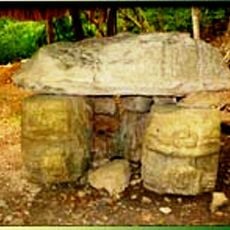
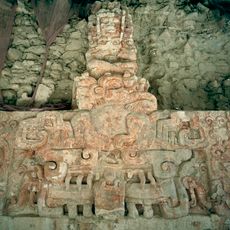
Calakmul is a modern name coined by Cyrus Lundell from ka'a (two), láak' (adjacent) and múul (artificial mound). In the Classic period the city core was called Ox Te' Tuun, "Place of Three Stones", and its rulers styled themselves k'uhul kaanal ajaw, divine lords of the snake. Visitors can still see carved stelae on the plazas.
Getting there requires advance planning, as no public transport is available; guided tours depart from Xpujil between 6:30 AM and 11:30 AM. The walk through the main zone takes about three hours and follows uneven paths with some steep climbs to pyramid platforms.
Structure II rises over 45 metres and is one of the tallest Mesoamerican pyramids; four tombs have been found inside it. The pyramid grew by building new stages over older ones, so earlier structures remain encased within. The site holds 6,750 identified structures, and its ancient core was called Ox Te' Tuun, "Place of Three Stones".
The community of curious travelers
AroundUs brings together thousands of curated places, local tips, and hidden gems, enriched daily by 92,791 contributors worldwide.