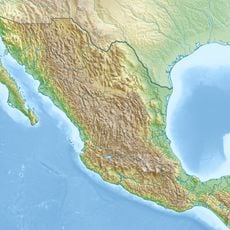
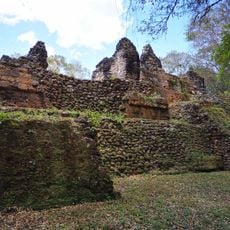
Río Bec, Maya archaeological site in Campeche, Mexico
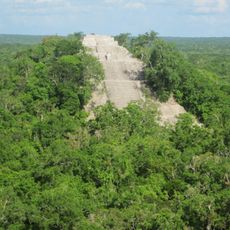
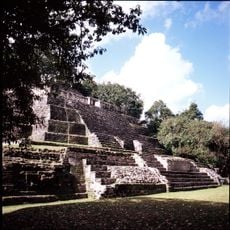
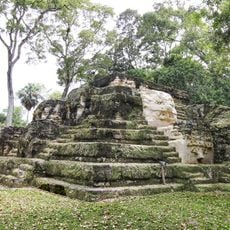
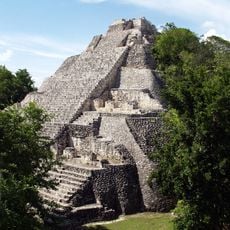
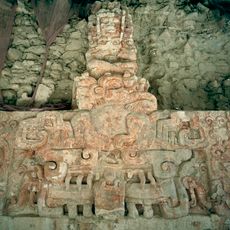
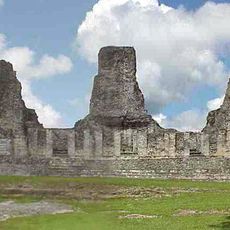
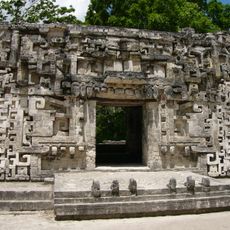
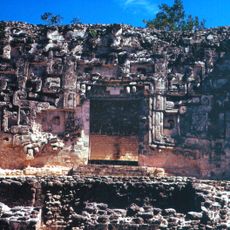
Río Bec is a Maya archaeological site in Campeche featuring clusters of stone buildings arranged around central plazas that span several square kilometers. The settlement includes temples, palaces, and residential structures decorated with intricate stonework and architectural embellishments.
The Río Bec style appeared in the 7th century AD and continued into the early 12th century. Teoberto Maler, an Austrian explorer, first mentioned the site in European literature at the end of the 19th century but never visited it. The French explorer Maurice de Perigny was the first European to visit and report on Río Bec. Since the late 20th century, French archaeologists from the CNRS led by Dominique Michelet have excavated and mapped several architectural groups; work on the principal building at Río Bec A, with three towers and several rooms, was underway in 2006.
The name Río Bec comes from Mayan: beek is the local roble tree (Ehretia tinifolia), so it means "River of the Oak". The style seen here spread to nearby sites such as Xpujil, Chicanná and Hormiguero, and is closely related to the Chenes style to the northwest. The towers and solid temples recall those of Tikal in the Petén, and are thought to evoke that distant city.
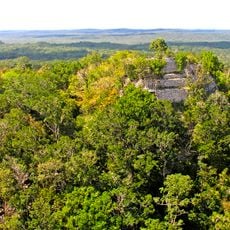
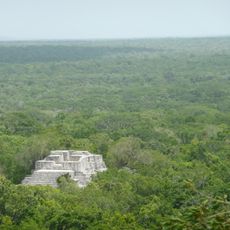
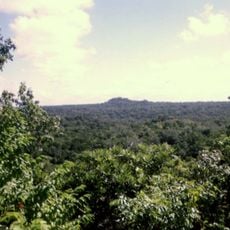
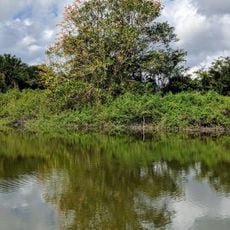
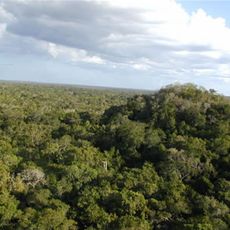
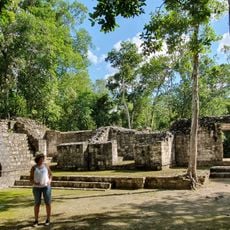
The site sits deep in tropical rainforest where temperatures run high and rainfall is frequent, so visitors should prepare for hot and humid conditions. Many structures remain partially covered by vegetation and unexplored, offering a real sense of discovery as you navigate through the jungle landscape.
The towers taper as they rise, which makes them look taller than they are. Their staircases are only carved reliefs, and the temples on top are solid masses with no inner rooms; the doorways are niches. The purpose of these temple-pyramids is unknown, though they resemble the twin-tower complexes of Tikal.
The community of curious travelers
AroundUs brings together thousands of curated places, local tips, and hidden gems, enriched daily by 95,278 contributors worldwide.