Edzna, Ancient Maya archaeological site in Campeche, Mexico
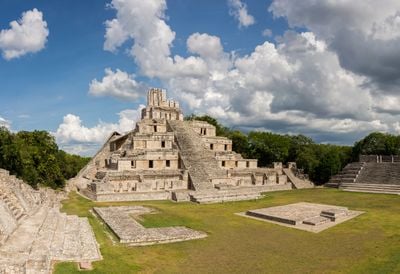
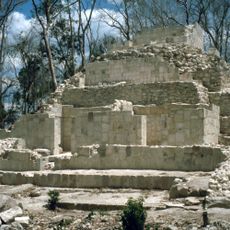
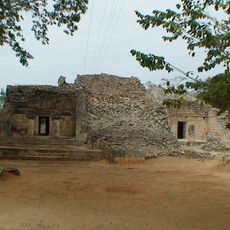
Edzná is an archaeological site with over 200 structures including pyramids, platforms, and residential buildings arranged around a central plaza. The site spreads across a large area and reveals how Maya builders organized their settlement across the landscape.
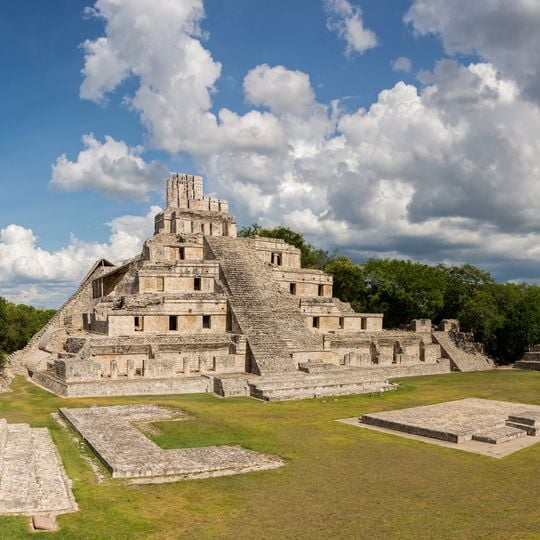
Edzná lies in the Edzná Valley in Campeche, not western Yucatan. Occupation dates from around 600 BCE; from about 300 CE the town was urbanized with a centralized government and the central acropolis was built. In the Late Classic it became a regional capital allied with Calakmul and Piedras Negras, and from around 600 CE the five-tier pyramid was erected. Decline set in between 900 and 1000 CE, ending in total abandonment around 1450.
The name Edzná likely derives from Ytzná, "house of the Itzaes", the lineage of the city's rulers. The Temple of the Masks bears two representations of the sun god with elite attributes: crossed eyes, filed teeth, nose and ear ornaments, and large zoomorphic headdresses.
The site is open to visitors daily, and it helps to wear comfortable shoes since you will be walking quite a lot. Bring water and sun protection, as there is little shade across the grounds and the heat can be intense.
The valley floods in the rainy season and stays humid most of the year, so the Maya dug canals to drain it, led the water into a lagoon turned into a reservoir by retaining walls, and used other channels to irrigate fields and fish.
The community of curious travelers
AroundUs brings together thousands of curated places, local tips, and hidden gems, enriched daily by 93,871 contributors worldwide.