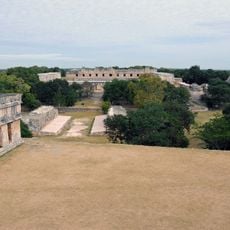
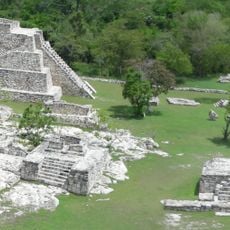
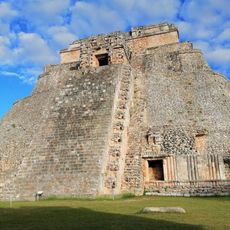
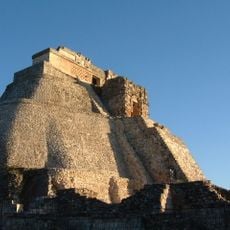
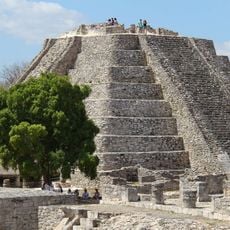
Xtampak, Maya archaeological site in Campeche, Mexico.
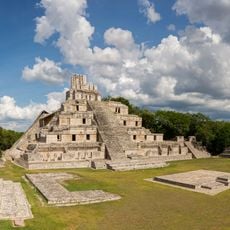
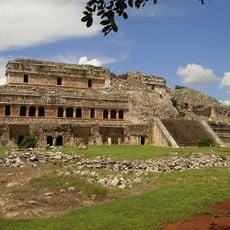
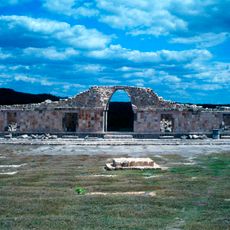
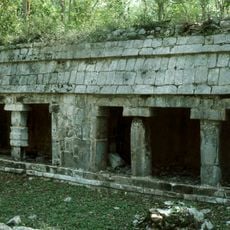
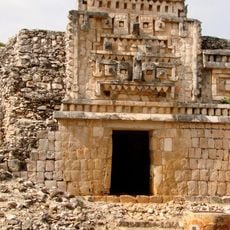
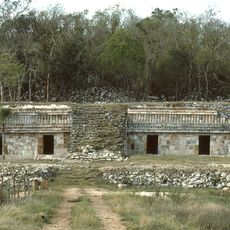
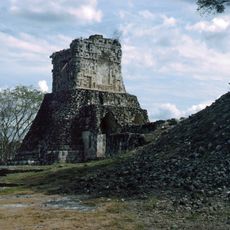
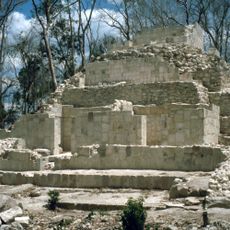
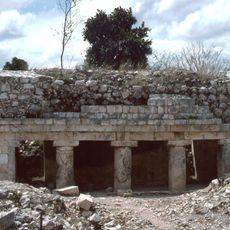
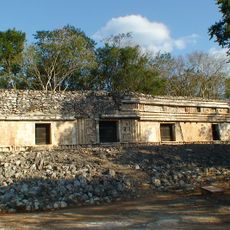
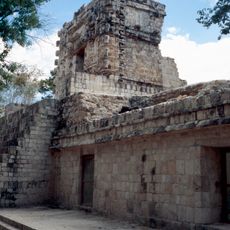
Xtampak is a Maya archaeological site in Campeche, Mexico, built on a flattened hilltop covering about 9 square kilometers. Its best-known structure, the Palace, is a three-story building with 44 rooms: 27 on the ground level, 12 on the second, and five on the third. A broad stairway on the east side leads to a doorway in a free-standing wall, while interior stairways starting in Rooms 6 and 10 wind up through all three levels.
Xtampak's origins date to around 400 BC, and the city grew over roughly 850 years, peaking between 550 and 950 as the capital of the Chenes Maya. John Lloyd Stephens and Frederick Catherwood first examined the ruins in 1841; Teobert Maler visited in 1891, Harry Pollock excavated in 1936, and restoration has continued since the mid-1990s.
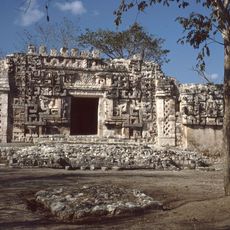
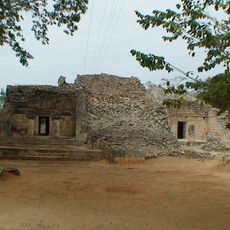
The name Xtampak means "old walls" in Maya. The site was the historical capital of the Chene Maya people, and its buildings show Chenes style with some Puuc influence. Eight stelae were found at the Hill Stars platform, all smooth and sculpted; Xtampak was one of the few Chenes cities that erected stelae.
The site is roughly 140 kilometers from Campeche city and reached via Highway 261 and a paved road. Plan your visit with adequate water and sun protection, as the location sits in a warm, dry region.
Xtampak is one of the few Puuc-style sites where legible Maya-script inscriptions with exact construction dates were found. The stelae stand in a courtyard south of the large pyramid, not scattered across the site.
The community of curious travelers
AroundUs brings together thousands of curated places, local tips, and hidden gems, enriched daily by 94,270 contributors worldwide.