Kabah, Archaeological site in Yucatan, Mexico
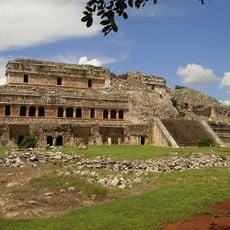
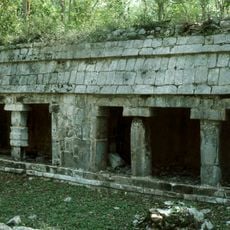
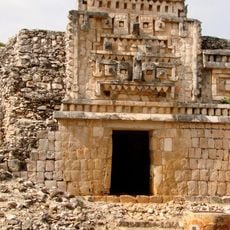
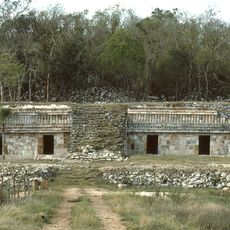
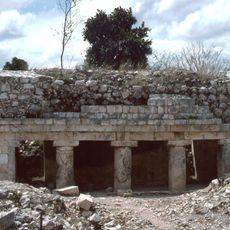
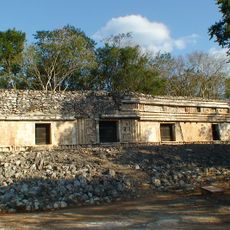
Kabah is a Maya archaeological site in the Puuc region of western Yucatan, second in size only to Uxmal. Its best-known building, the Codz Poop or Palace of the Masks, has a west facade covered with hundreds of stone masks of the long-nosed rain god Chaac, set in two horizontal bands above a narrow chevron border.
People settled at this location during the Middle Preclassic period around 700 to 300 BCE. The structures visible today were built later, between 600 and 900 CE, during the height of Maya culture in this region.
The name Kabah probably comes from archaic Maya for "strong hand", a pre-Columbian name cited in the Chilam Balam of Chumayel; Teoberto Maler proposed Kabahaucan, "royal snake in the hand". In the West Group, red handprints on room walls give it the Maya name Dzalkabilkik, "place of blood hands". Copal incense was found inside some stone noses of the Chaac masks.
The site is accessible through Highway 261 on the Puuc Route, roughly one hour south of Merida. From Uxmal, visitors need only about 20 minutes by car to reach this location.
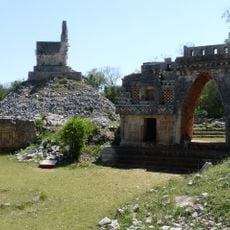
The sacbe to Uxmal runs 18 km and is 5 m wide, with monumental arches at both ends; the surviving arch near Kabah's centre was rebuilt in the 1950s under archaeologist Ponciano Salazar, and traces of red paint remain on its west side.
The community of curious travelers
AroundUs brings together thousands of curated places, local tips, and hidden gems, enriched daily by 94,226 contributors worldwide.