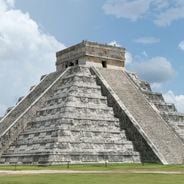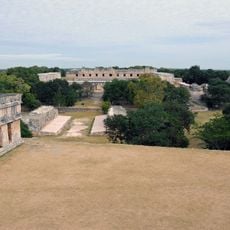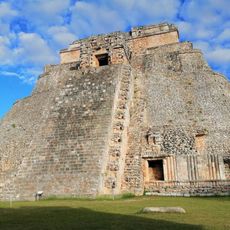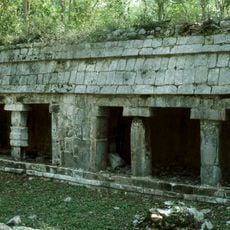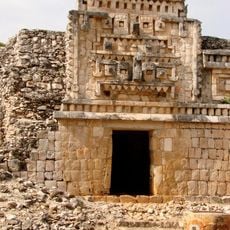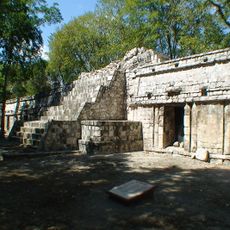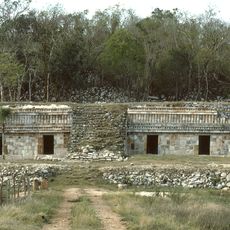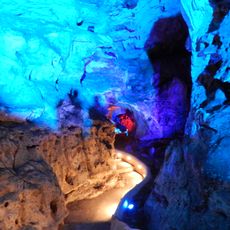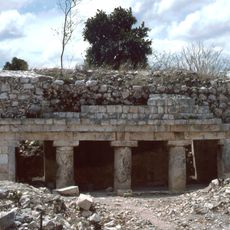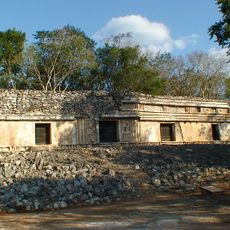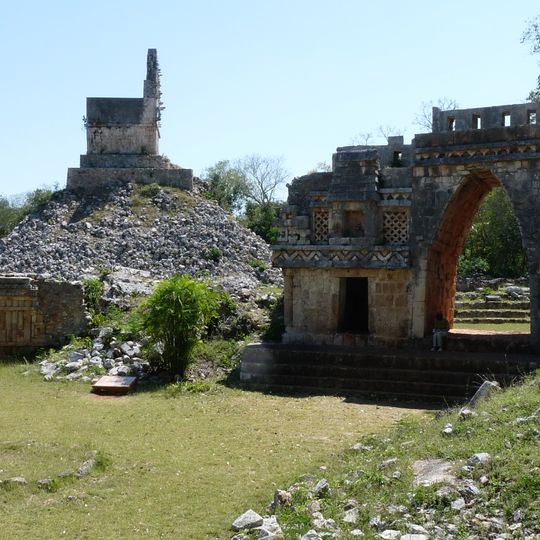
Labna, Archaeological site in Oxkutzcab, Mexico.
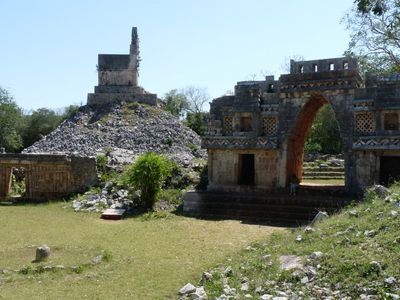
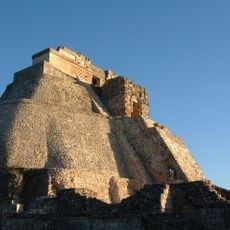
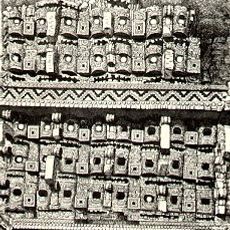
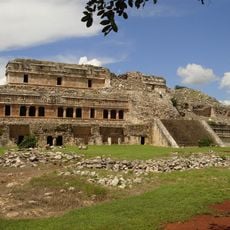
Labná is an archaeological site with multiple stone structures decorated with carved masks and geometric patterns in the Puuc architectural style. The palace complex, towers, and ceremonial archway sit within two courtyards connected by stone pathways.
The site emerged during the Classic period and grew into a regional settlement between 600 and 900 CE. The population then declined steadily until inhabitants abandoned it completely around 1200 CE.
The ceremonial archway links two courtyards through hand-carved stone masks that held spiritual meaning for the people who built this place. These carvings show what mattered most to those who lived here and shaped their daily religious life.
Arrive early to explore the structures in a quieter setting and avoid midday crowds. The paths connecting the buildings are walkable but require sturdy shoes and some stamina due to the sloping terrain.
The palace features a carved inscription dated to 862 CE, one of the few precisely dated structures in the Puuc region. This date reveals how long the Maya inhabited this place and kept building there.
The community of curious travelers
AroundUs brings together thousands of curated places, local tips, and hidden gems, enriched daily by 60,000 contributors worldwide.