La Esmeralda Dam, Embankment dam in Santa María, Colombia
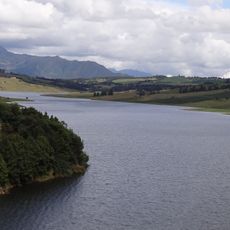
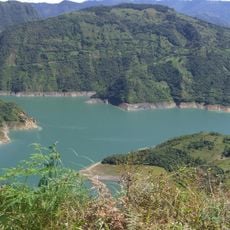
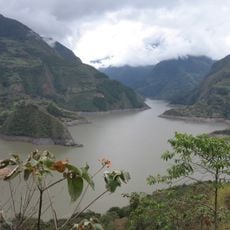
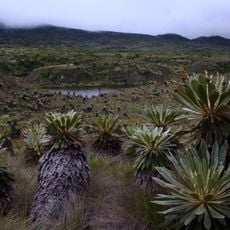
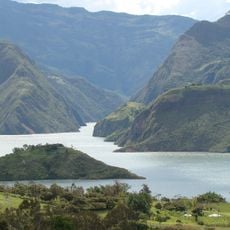
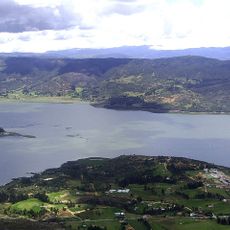
La Esmeralda Dam is a large embankment dam that holds back water on the Batá River in the Colombian highlands. The structure creates a substantial reservoir that supplies water for electricity production downstream.
Studies for the project began in 1954, when a topographer at the Electric Promotion Institute proposed diverting the Batá to the lower Lengupá; President Gustavo Rojas Pinilla backed it as "Project Gustavo". Construction of the first 500 MW stage started in November 1970 under Ingetec S.A. with a World Bank loan and was completed in 1977; the second stage, begun in June 1976, was inaugurated in 1982. In 1996 operation passed to the private sector.
The dam represents Colombia's commitment to sustainable energy production, providing 8 percent of the nation's electrical power through the Chivor Hydroelectric Project.
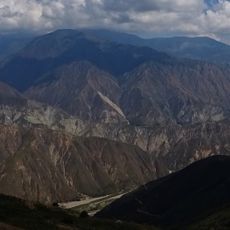
The dam sits in a mountainous area where visitors can view the reservoir and surrounding valley. Access is best during the dry season when mountain roads are passable and visibility is clear.
The Chivor power station uses eight Pelton turbines of 125 MW each, fed by two 7.6 km tunnels that split into eight penstocks near the Lengupá River. In 2004, an out-of-season storm filled the nearly empty reservoir with sediment-laden water; the plant was not shut down at once, turbines eroded, and it stayed off the grid for 25 days.
The community of curious travelers
AroundUs brings together thousands of curated places, local tips, and hidden gems, enriched daily by 94,458 contributors worldwide.