Trinity Dam, Embankment dam and hydroelectric station in Trinity County, United States
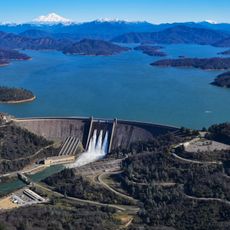
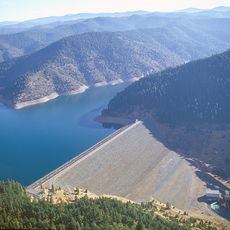
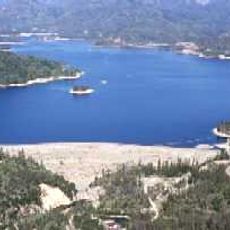
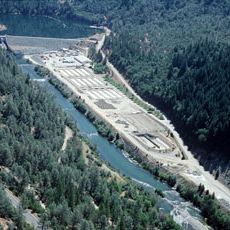
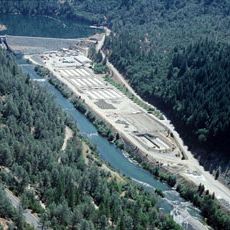
Trinity Dam is an embankment dam on the Trinity River in California, rising 164 meters high and forming Trinity Lake, the state's third largest reservoir with around 233 kilometers of shoreline. The facility uses two Francis turbines to generate power while regulating water flow for irrigation and flood control.
The United States Congress authorized the Central Valley Project in 1935, which eventually led to Trinity Dam's construction beginning in 1956 and completion in 1957. The project was part of a broader infrastructure effort to manage water resources and generate power across the western United States.
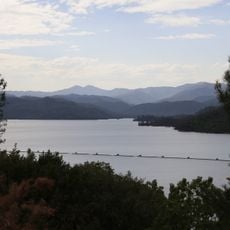
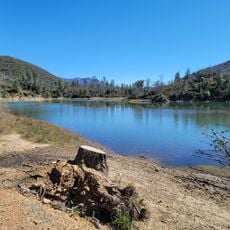
The reservoir's name reflects local preferences after residents' homes were submerged during construction. The change from Clair Engle Lake to Trinity Lake shows how the community's identity became tied to this new landscape.
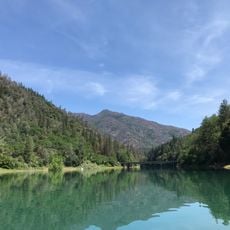
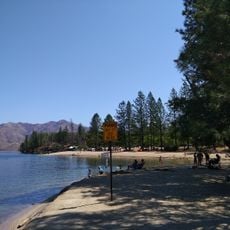
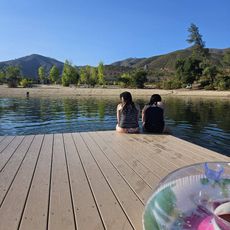
The reservoir is accessible during daylight hours, with various areas offering different opportunities for sightseeing and recreation. It is wise to dress appropriately for the weather and bring water and suitable gear, as conditions vary with the season.
The facility has a morning glory spillway that handles about 630 cubic meters of water per second and is known for its distinctive design. An auxiliary spillway can discharge an additional 64 cubic meters per second and works together with the main system for flood safety.
The community of curious travelers
AroundUs brings together thousands of curated places, local tips, and hidden gems, enriched daily by 91,106 contributors worldwide.