Castle Rock National Wildlife Refuge, National Wildlife Refuge in Crescent City, California, United States
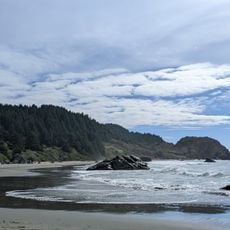
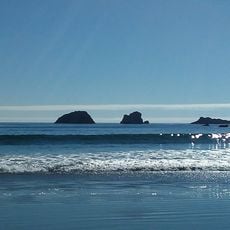
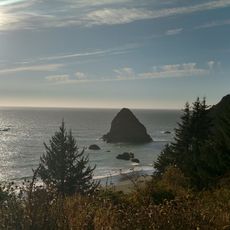
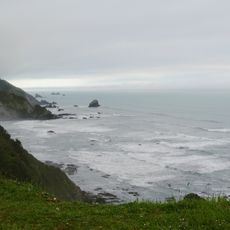
Castle Rock National Wildlife Refuge is a 14-acre coastal rock rising 335 feet above the Pacific, 0.5 miles offshore from Crescent City. Its west side is pillow basalt; the east is shale and greywacke, with wave-cut sea caves on the south and a 100-foot collapsed fault pit on the east.
The refuge was established as a protected area in 1979 when the Fish and Wildlife Service took over management to safeguard breeding colonies. This action secured the site for marine animals and seabirds.
Tolowa men paddled 30- to 40-foot sea-going canoes to Castle Rock and St. George Reef to hunt sea lions, and in May they collected eggs, eating some and blowing others empty to make decorative garlands. Their village sites lay on the nearby headlands, not on the island, and no archaeological sites are known there.
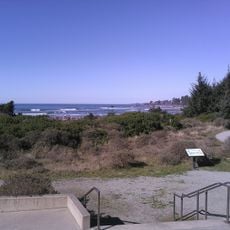
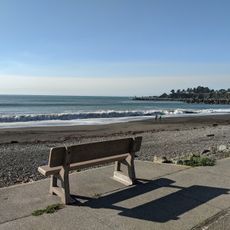
The public overlook along Pebble Beach Drive in Crescent City offers the best viewing experience with spotting scopes available for observing wildlife. This location provides comfortable access without needing to visit the protected rock itself.
Castle Rock is the second-largest nesting seabird colony south of Alaska, after the Farallon Islands, and holds the largest breeding population of common murres on the Pacific Coast, estimated at up to 100,000 birds. It is also the northernmost breeding colony of northern elephant seals.
The community of curious travelers
AroundUs brings together thousands of curated places, local tips, and hidden gems, enriched daily by 93,036 contributors worldwide.