Harris Beach State Park, State park along Pacific coast in Oregon, United States.
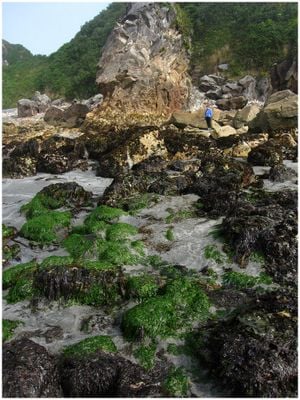
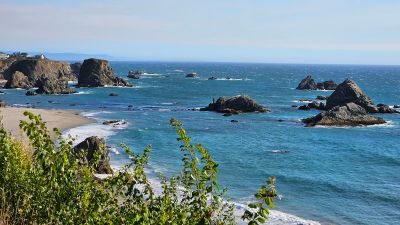
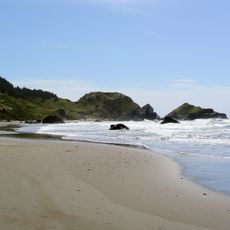
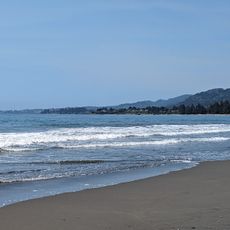
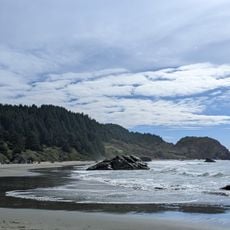
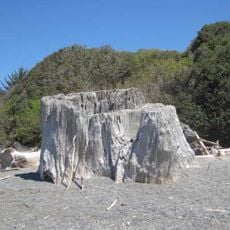
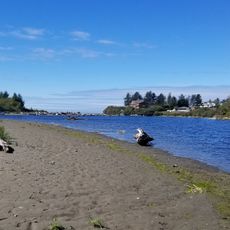
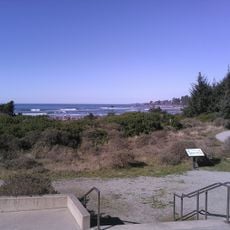
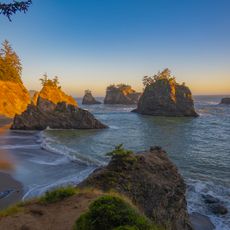
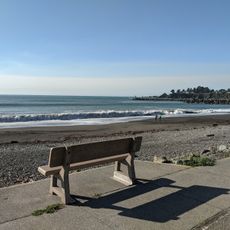
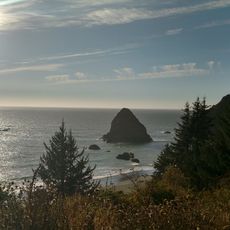
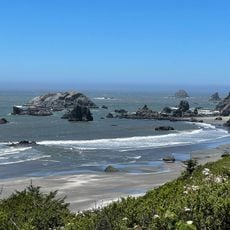
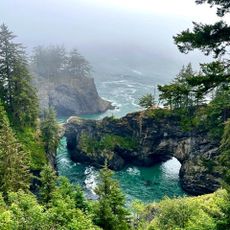
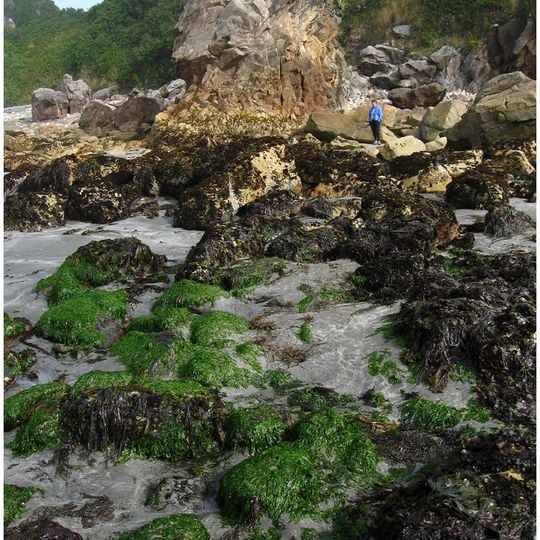
Harris Beach State Park is a coastal reserve in Oregon featuring rock formations rising from the Pacific and beaches with tide pools at low tide. The park spans more than 170 acres and provides different habitats for coastal wildlife and seabirds.
A Scottish farmer named George Harris purchased the land in 1871 and operated a sheep and cattle ranch there until the area became a state park in 1926. The conversion from private farmland to public protected area marked the start of its role as a nature reserve.
The offshore rock serves as a nesting ground for tufted puffins and other seabirds that visitors can watch from the shore. These colonies attract people interested in observing marine wildlife in its natural setting.
The park has camping areas with different accommodation types including full-hookup sites and tent spots. The best time to visit is at low tide when the rocky tide pools become accessible along the shore.
The park offers a rare view of migrating gray whales passing by during winter and spring, while harbor seals and sea lions inhabit the coastal waters year-round. This mix of traveling whales and resident marine mammals makes the wildlife here particularly varied.
The community of curious travelers
AroundUs brings together thousands of curated places, local tips, and hidden gems, enriched daily by 60,000 contributors worldwide.