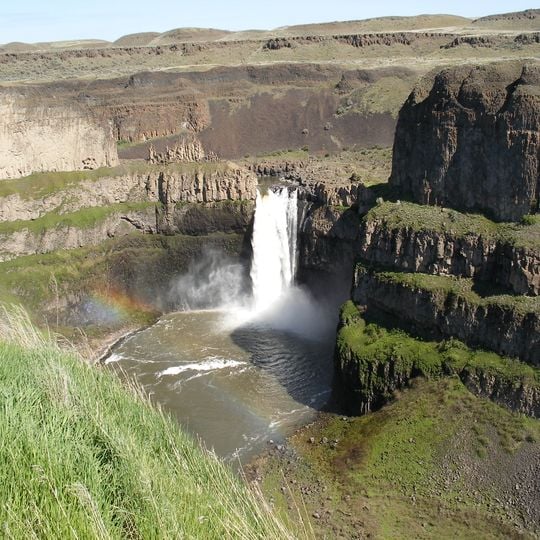
Palouse Falls State Park, State park with 200-foot waterfall in Washtucna, US.
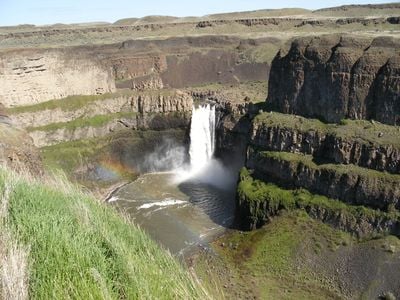
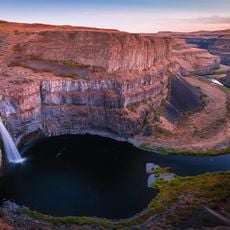
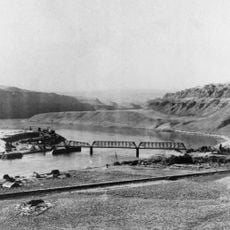
Palouse Falls is a 200-foot waterfall on the Palouse River in Palouse Falls State Park, southeastern Washington. The river drops over a stepped rim of Columbia River Basalt, with a main plunge from a notch between blocky columns and a smaller upper fall about 20 feet high located 1,000 feet north-northwest. The canyon below is 377 feet deep, exposing thick basalt layers.
The ancestral Palouse River once ran through the now-dry Washtucna Coulee to the Columbia. During the Pleistocene, Missoula floods overtopped the south valley wall and cut a new channel, diverting the river to the Snake and creating the falls. The United States Exploring Expedition first reported the waterfall in 1841; the park was established on June 3, 1951.
The Palouse people called the falls Aput Aput, meaning "falling water"; the fall was later renamed to honor the tribe. A Palouse legend tells of four giant brothers who speared Big Beaver five times, and each wound carved the earth until the final strike dug the canyon now holding the falls. In 2014, students from Washtucna lobbied the legislature to make Palouse Falls the official state waterfall.
Three viewpoints around the park give you different angles to see the waterfall: one near the parking area, an interpretive walking path, and the elevated Fryxell Overlook. Wear sturdy shoes and dress for changing weather, as conditions can shift significantly throughout the year.
In 1984 the Franklin County Public Utility District proposed a 98-foot dam upstream of the falls for hydropower, which would have supplied over a third of the county's power. Ratepayers voted it down, keeping the falls intact. The canyon walls expose basalt layers up to 30 m thick.
The community of curious travelers
AroundUs brings together thousands of curated places, local tips, and hidden gems, enriched daily by 93,845 contributors worldwide.