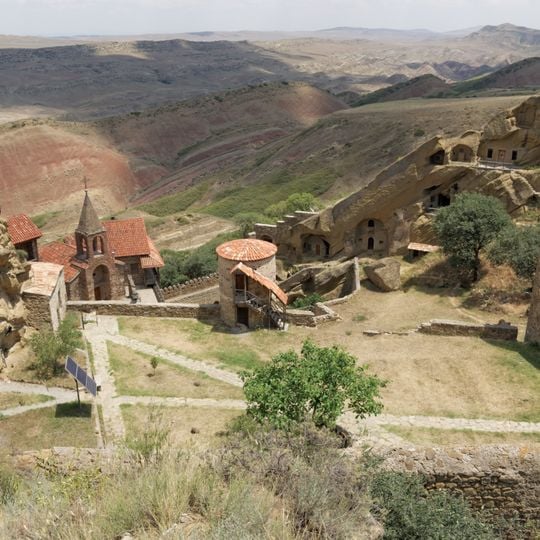
David Gareja monastery complex, Cave monastery in Kakheti, Georgia.
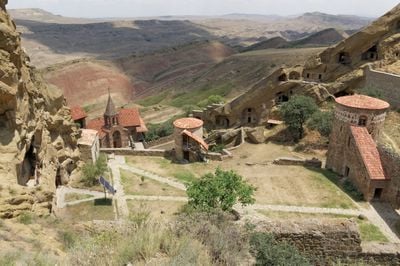
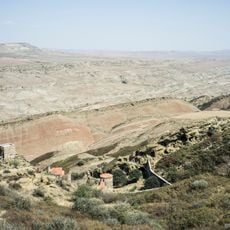
David Gareja monastery complex is a rock-hewn Georgian Orthodox complex on the half-desert slopes of Mount Gareja, about 60–70 km southeast of Tbilisi. It comprises hundreds of cells, churches, chapels, refectories and living quarters hollowed from the rock face. A stone church with a tall conical spire topped by a cross stands beside a red-tiled building, with arched cave facades linked by stone walls and paths.
David of Gareji, one of the thirteen Assyrian monks who came to Georgia, founded the lavra in the first half of the 6th century; his disciples Dodo and Luciane founded Dodo's Rka and Natlismtsemeli. The complex peaked between the late 11th and early 13th centuries, when Udabno, Bertubani and Chichkhituri were built. Mongols devastated it in 1265 and Safavid troops in 1615–1616; Onopre Machutadze revived it as Father Superior in 1690.
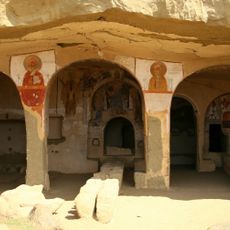
The walls display medieval frescoes depicting religious scenes that show how Georgian artistic expression developed over centuries. These artworks reveal the skill of the monks who created them and their spiritual vision.
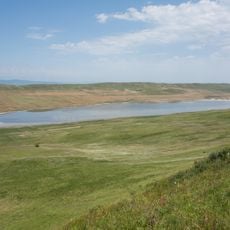
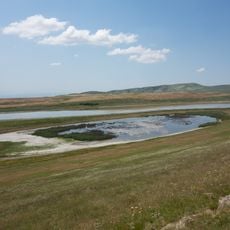
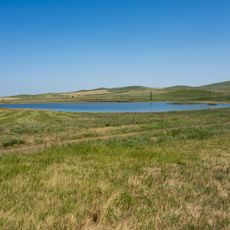
The site lies in a remote location and is best reached from Tbilisi; allow extra time for travel. Bring plenty of water, wear appropriate clothing, and be prepared for strong sun exposure with little shade available.
The settlement spans the Georgia-Azerbaijan border, with caves and churches scattered across both sides of the international boundary. This location sometimes makes it challenging to visit all parts of the complex, as access from the Azerbaijani side can be restricted.
The community of curious travelers
AroundUs brings together thousands of curated places, local tips, and hidden gems, enriched daily by 93,634 contributors worldwide.