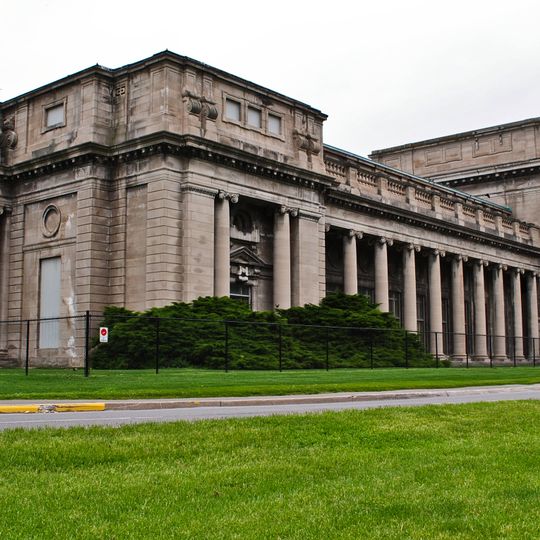
Toronto Power Generating Station, National historic site along Niagara River, Niagara Falls, Canada
The Toronto Power Generating Station is a national historic site and former hydroelectric facility on the bank of the Niagara River in Niagara Falls, Ontario. The long limestone building runs parallel to the river and has a formal facade with two rows of columns on its western side, while the machinery it once housed sat deep underground in turbine pits connected to generators above.
The station was built between 1903 and 1913 and became the first Canadian-owned hydroelectric facility at Niagara Falls. It operated for decades before shutting down in 1974, when it was replaced by more modern power infrastructure.
The station was designed by E.J. Lennox, the same architect behind Toronto's Old City Hall. The western facade, with its limestone columns, looks more like a civic building than an industrial facility, which reflects how seriously electricity was taken as a symbol of progress at the time.
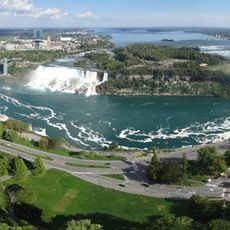
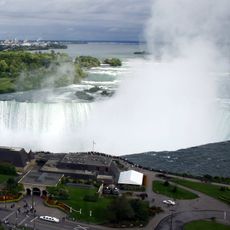
The site is located along the Niagara River and is best approached on foot from the nearby parkway, which offers open views of the falls. Restoration work has been ongoing, so it is worth checking in advance which parts of the building are open to visitors.
Although the station sits right beside the falls, the electricity it generated was sent all the way to Toronto through overhead lines, making it one of the longest power transmission routes in North America at the time. This connection between a remote natural source and a distant city helped prove that electricity could be moved over long distances without losing its usefulness.
The community of curious travelers
AroundUs brings together thousands of curated places, local tips, and hidden gems, enriched daily by 92,287 contributors worldwide.