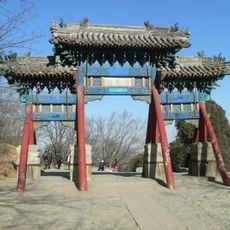
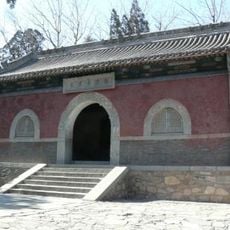
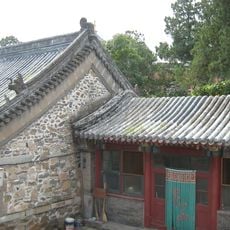
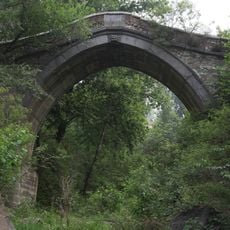
Dajue Temple, Buddhist temple in Haidian District, Beijing, China
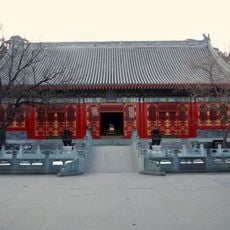
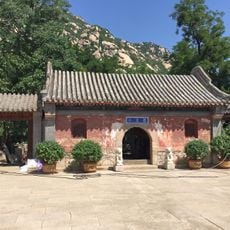
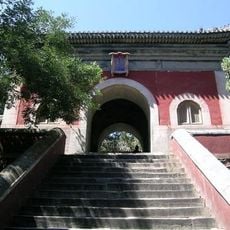
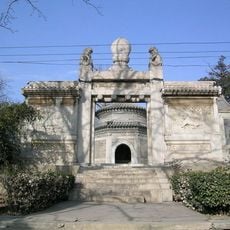
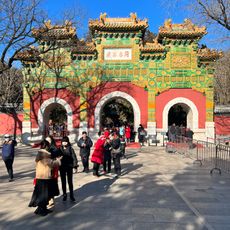
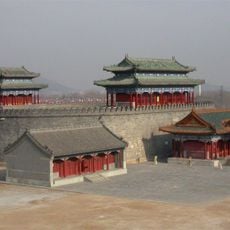
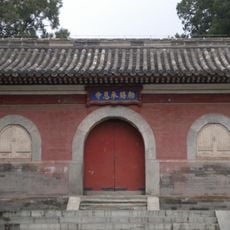
Dajue Temple is a Buddhist sanctuary on Yangtai Mountain's southern slope that contains five main buildings arranged in a line from east to west. The layout connects gates and halls through a carefully planned path.
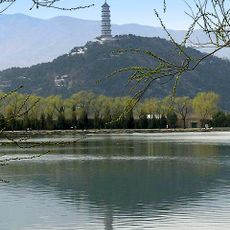
The site was founded in 1068 as Clear Water Temple during the Liao Dynasty when construction began on Yangtai Mountain. A major reconstruction in 1428 resulted in the name change to what it is called today.
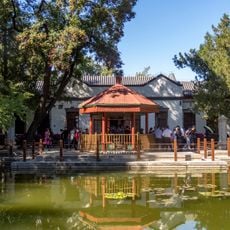
The temple's name means "Great Awakening Temple." Since 1997 the Minghui Tea House has operated in the grounds, with tea rooms in the Qiyun Pavilion, Siyi Hall and side rooms, while the ordination hall became a Shaoxing restaurant and monks' quarters became guest rooms. Each April the temple holds a magnolia festival.
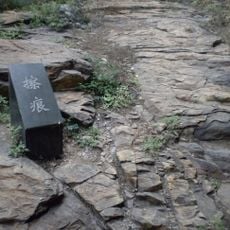
Visitors should expect uneven paths on the hillside terrain and wear sturdy footwear, especially if rain makes the ground slippery. Arriving early in the morning allows you to explore the grounds with fewer crowds.
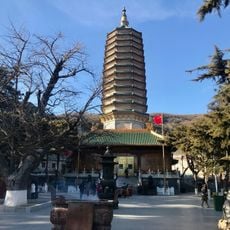
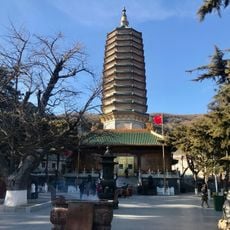
The male ginkgo north of the Amitabha Hall is said to have been planted in the Liao dynasty, over 900 years ago; it stands about 25 m tall with a trunk circumference of 7.5 m, and the Qianlong Emperor wrote a poem about it. Beside the Jialing pagoda, a pine and a cypress reach their branches toward the white stupa, a sight called "pine and cypress embracing the pagoda".
The community of curious travelers
AroundUs brings together thousands of curated places, local tips, and hidden gems, enriched daily by 93,671 contributors worldwide.