Xumishan grottoes, Buddhist cave temples in Guyuan, China
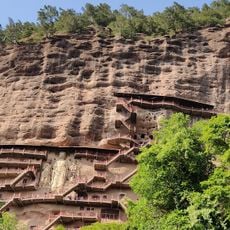
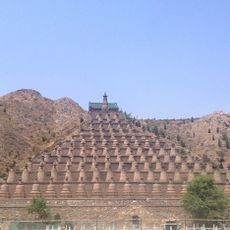
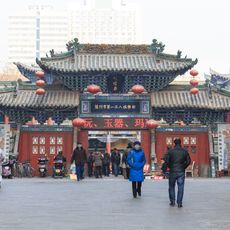
The Xumishan grottoes comprise 132 numbered caves cut into the south and east faces of red sandstone hills in the Liupan Mountains, at an elevation of about 1,700–1,850 m. They are grouped into eight zones, including Dafo Tower, Zisun Palace, Yuanguang Temple, Xiangguo Temple and Taohua Cave. Cave 5, the 20.6 m seated Buddha, is the largest.
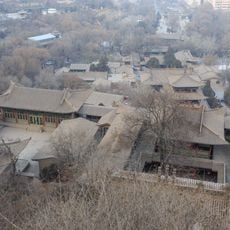
Construction began in the late Northern Wei period, and caves were added under the Western Wei, Northern Zhou, Sui and Tang, with the Tang phase (680–779) producing the largest number of caves. Song and Western Xia repairs left Tibetan Buddhist wall paintings in some caves, and in 1443 the Ming emperor Yingzong renamed the rebuilt temple Yuanguang Temple. The 1920 Haiyuan earthquake destroyed the surface buildings.
The artworks inside the caves show Indian and Central Asian influences that reflect trade connections along historic routes. These artistic features tell the story of cultural exchange between distant regions that met at this location.
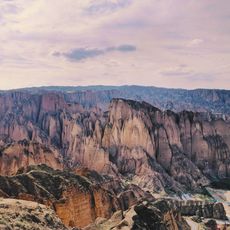
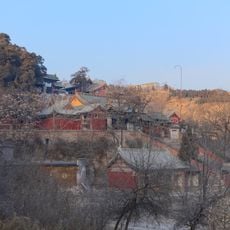
The caves lie on the south and east sides of red sandstone hills in the Liupan range, about 55 km northwest of Guyuan, at 1,700–1,850 m. The numbered caves run roughly 1,500 m from south to north across eight areas, from Dafo Tower to Heishigou. Paths and patrol roads were paved with stone slabs in 2009, and power lines were buried.
The seated Buddha of cave 5, the Dafo Tower, rises 20.6 metres and is the largest carving at the site. In 1982, the year the grottoes were listed as a national protected site, restorers applied cement to the figure, a treatment now considered improper. Cave 5 was used as a shooting target during the Cultural Revolution.
The community of curious travelers
AroundUs brings together thousands of curated places, local tips, and hidden gems, enriched daily by 94,483 contributors worldwide.