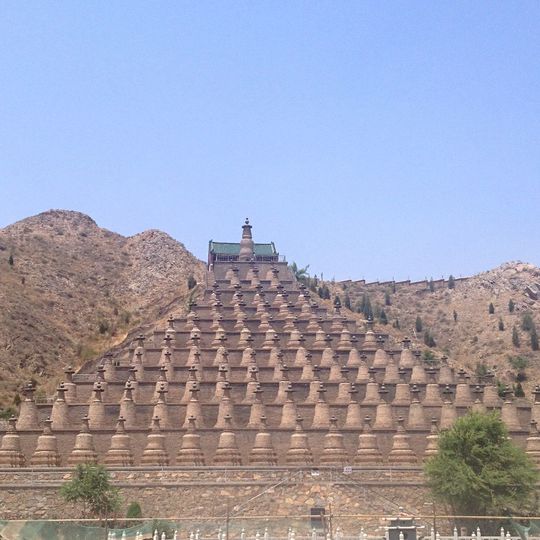
One Hundred and Eight Stupas, Buddhist stupa complex in Qingtongxia, China
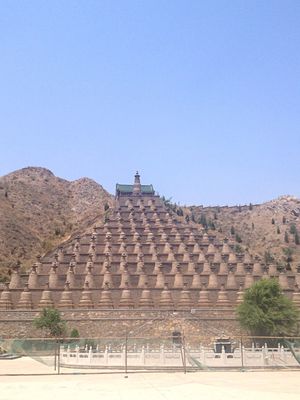
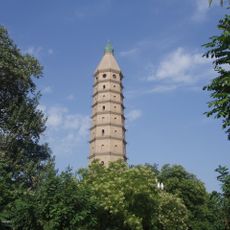
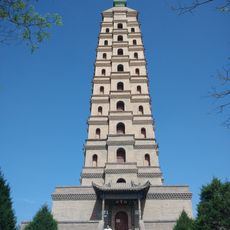
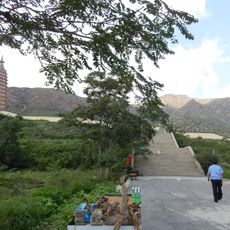
One Hundred and Eight Stupas form a triangular layout spread across eleven terraces descending a hillside that faces the Yellow River, with fewer structures on each lower level. The complex provides paved walkways, an artificial lake, exhibition halls, and visitor facilities explaining restoration efforts and findings.
This Buddhist temple complex originated during the Western Xia dynasty between 1038 and 1227, built using sun-dried mud bricks to encase wooden support pillars at the core. Construction methods reveal techniques specific to that historical period.
The number 108 carries spiritual weight in Buddhist practice, seen in the stupa count and in prayer beads that followers use during meditation. Visitors can sense this sacred symbolism reflected throughout the hillside arrangement.
The site is straightforward to explore using built-up pathways that connect the different terrace levels. Visitors benefit from reading the exhibition materials before climbing to gain full context for what they see at each level.
Excavations unearthed clay figurines, miniature stupas, and fragments of Buddhist texts inscribed in Sanskrit hidden beneath white plaster layers that had protected them for centuries. These discoveries reveal artistic and textual activity that extended beyond what the exterior suggested.
The community of curious travelers
AroundUs brings together thousands of curated places, local tips, and hidden gems, enriched daily by 90,848 contributors worldwide.