Haibao Pagoda Temple, Buddhist temple in Xingqing District, China
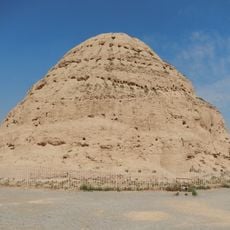
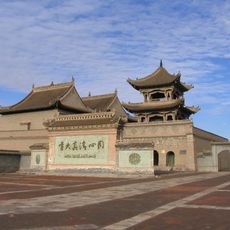
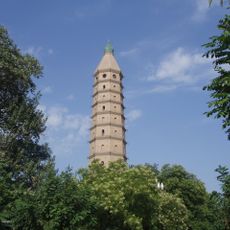
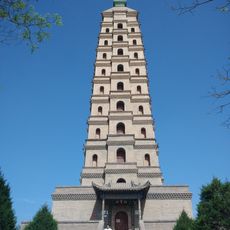
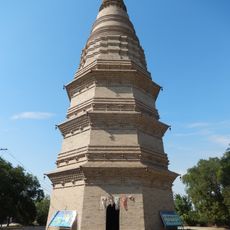
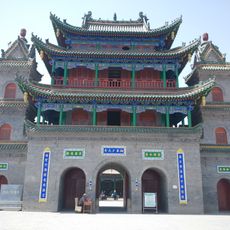
Haibao Pagoda Temple faces west and is arranged in two courtyards: the front holds the Hall of Shanmen, Hall of Four Heavenly Kings and Mahavira Hall around a patio, while a footbridge leads to the rear courtyard with the Hall of Skanda and Hall of Jade Buddha. Behind the Mahavira Hall stands the brick Haibao Pagoda, 53.9 m tall on a square base 19.7 m per side.
The temple was first built in the early 5th century, during the Northern and Southern dynasties. Local county annals record that the pagoda was restored by Helian Bobo (381–425), ruler of the Xia Kingdom. Earthquakes struck in 1712 and 1778, and the present temple was rebuilt in the 18th century under the Qianlong Emperor. In March 1961 the site was listed among the Major National Historical and Cultural Sites of Ningxia.
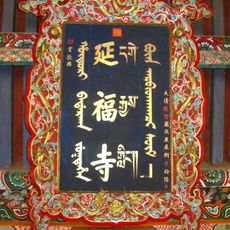
The temple is the headquarters of the Buddhist Association of Ningxia. Its name comes from the Haibao Pagoda, also called Heibao Pagoda or Beita (Northern Pagoda). The plaque over the Shanmen gate bears characters written by Zhao Puchu, then president of the Buddhist Association of China.
Wear comfortable walking shoes as the grounds have uneven surfaces and climbing the pagoda involves multiple staircases. Morning visits are preferable to avoid crowds and get better lighting for photography throughout the complex.
The pagoda's name has shifted over the centuries: local records call it Hebao Pagoda, and it is still commonly known as the Northern Pagoda (Beita). The brick base measures 19.7 metres on each side and rises 5.7 metres, while the whole structure reaches 53.9 metres. Its eleven-storey body sits on a twelve-sided plan, a form rare among Chinese pagodas.
The community of curious travelers
AroundUs brings together thousands of curated places, local tips, and hidden gems, enriched daily by 94,042 contributors worldwide.