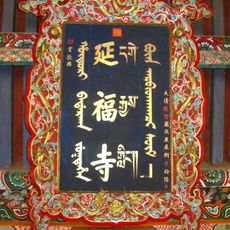
Guangzong Temple, Tibetan Buddhist monastery in Alxa Left Banner, Inner Mongolia, China
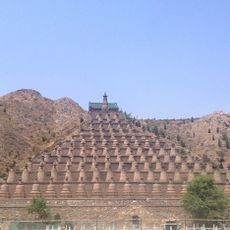
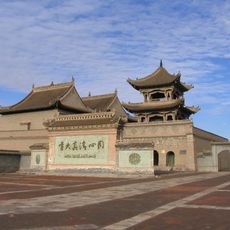
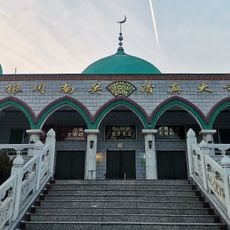
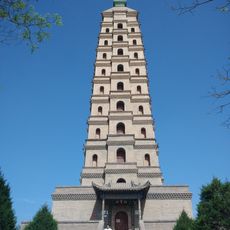
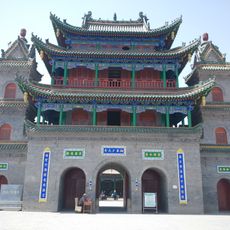
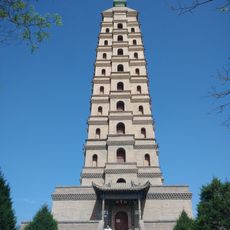
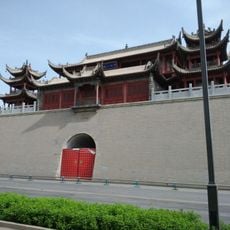
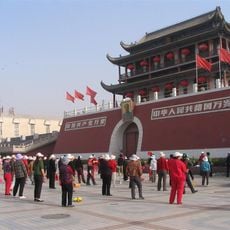
Guangzong Temple is a Buddhist monastery on the western slopes of the Helan Mountains, featuring more than 20 halls and rooms including the Main Assembly Hall, Mahavira Hall, and Yellow Hall. The structures follow classical Chinese architecture and are arranged across the hillside site.
Guangzong Temple was built in 1757 by Ahwang Duoerji, a disciple of the 6th Dalai Lama, under the Qianlong Emperor, and first named Ahda Ximai Deli Temple. In 1760 Qianlong granted a plaque bearing the name Guangzong Temple in Mongolian, Chinese, Manchu and Tibetan. Expanded under the Daoguang Emperor, it was burned in 1869, only the Kalachakra and Vajrayogini halls surviving, and rebuilt in the Guangxu era. Red Guards destroyed it in 1966 and it was dismantled in 1971; rebuilding began in 1981.
The temple's Tibetan name is Danjiling, and its Yellow Hall holds the gilded reliquary stupa of the 6th Dalai Lama, Tsangyang Gyatso, whose remains are kept inside. Every year on the 25th day of the 11th lunar month, monks hold a major assembly with a mandala offering before that stupa to mark his birth. The temple also keeps woodblock prints of two of his later works, the Prayer to Avalokiteshvara and the Offering to the Deities of Alxa.
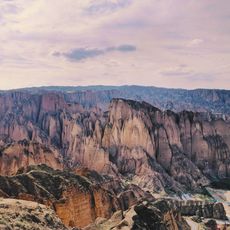
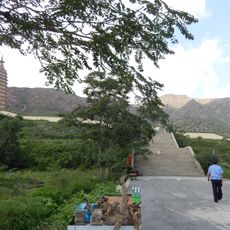
Guangzong Temple lies in a valley on the western slope of the Helan Mountains, about 23 km southeast of Bayanhot. The site is built against the mountain and surrounded by peaks. Visitors can reach the nearby Zhanmao Mountain hanging temple, where the monk Sangye Labtan has guarded a cave since 1981.
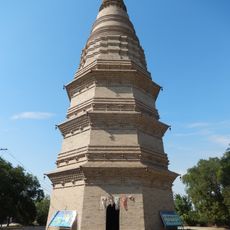
The monastery houses a stupa containing remains of the 6th Dalai Lama, brought to the site following restoration in 1981. This relic makes it a special pilgrimage destination for Buddhists across the wider region.
The community of curious travelers
AroundUs brings together thousands of curated places, local tips, and hidden gems, enriched daily by 93,093 contributors worldwide.